Blog
PVcase Prospect vs. Paces: a technical benchmark
June 30, 2026
PVcase Products

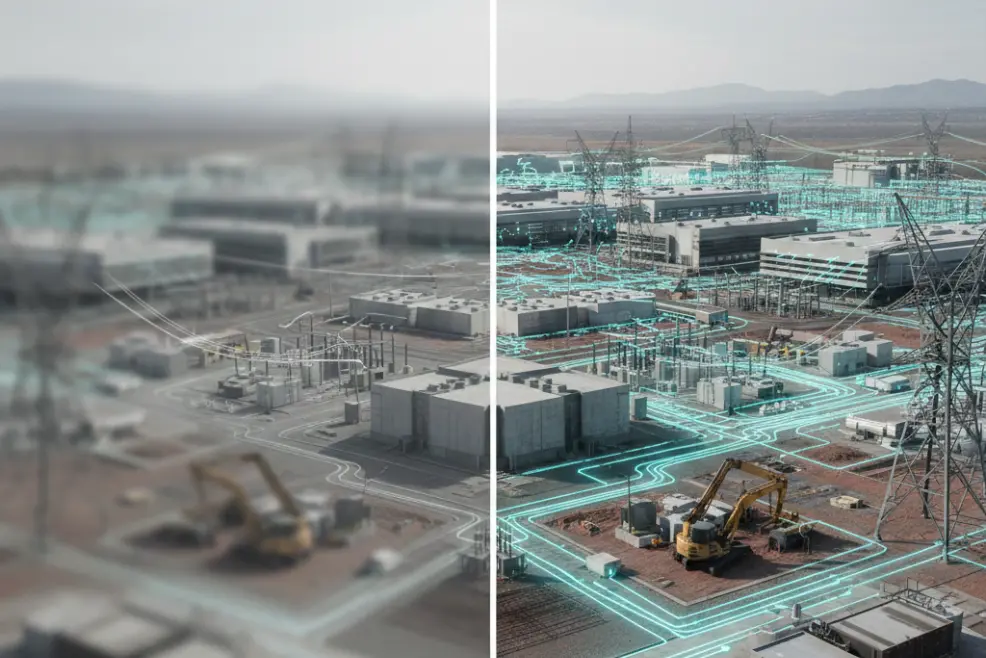
You can’t scale a pipeline when interconnection studies, energy markets analysis, and land feasibility don’t connect. Siloed systems and interconnection strategy then require extensive manual cross-referencing with separate tools, and this just doesn’t work at scale. When grid, market, and land data reside in different locations, teams spend months chasing projects that collapse once grid constraints emerge.
Standalone grid tools provide high-quality interconnection studies, yet that data is often siloed and geared toward a transmission/IX engineer audience. Therefore, it's challenging to join that analysis with the full development cycle and the entire project development team. Separate tools for market feasibility and land evaluation require additional manual work across disconnected workflows.
Developers also face increasing pressure when ideal land around high-capacity substations is already taken. Many teams need to evaluate transmission lines, upgrade costs, zoning, permitting, and large geographic datasets while trying to understand interconnection potential. The process becomes even more challenging when large load requests, such as those from hyperscale data centers, lack standardized queues.
No grid modeling provider is able to model large load queues since they don’t exist, and utilities do not provide load queue information for analysis.
Disconnected workflows lead to dead-end projects and delays once interconnection risks or upgrade constraints surface. Teams often lack a single source of truth, and early decisions depend on time-consuming cross-checks between grid analysis, market pricing, and land feasibility.
Traditional site selection follows a "land-first" principle, where teams commit to acreage based on proximity to a transmission line or favorable community sentiment. However, in a heavily constrained grid like the US', securing a viable point of interconnection with ready-made capacity is rare.
Instead, developers who don't identify and prioritize quality capacity analysis face unpleasant surprises: a minor adjustment in project size can cross critical technical thresholds, suddenly triggering millions of dollars in network upgrade obligations.
So, while teams wait weeks for isolated, ad-hoc power-flow studies, these upgrade fees remain invisible during early screening. The result is a high-stakes guessing game that routinely leads to stalled or unviable projects after months of wasted engineering capital and extensive due diligence.
A successful site screening process demands a scalable, integrated power-first approach that includes grid update cost analysis from the start.
PVcase Prospect provides the end-to-end solution for consultant-grade interconnection studies, market analysis, and land feasibility, designed to eliminate fragmented tools and de-risk your renewable energy project pipeline at scale. Developers use it to move from siloed data to complete project viability and to control their pipeline with a single source of truth.
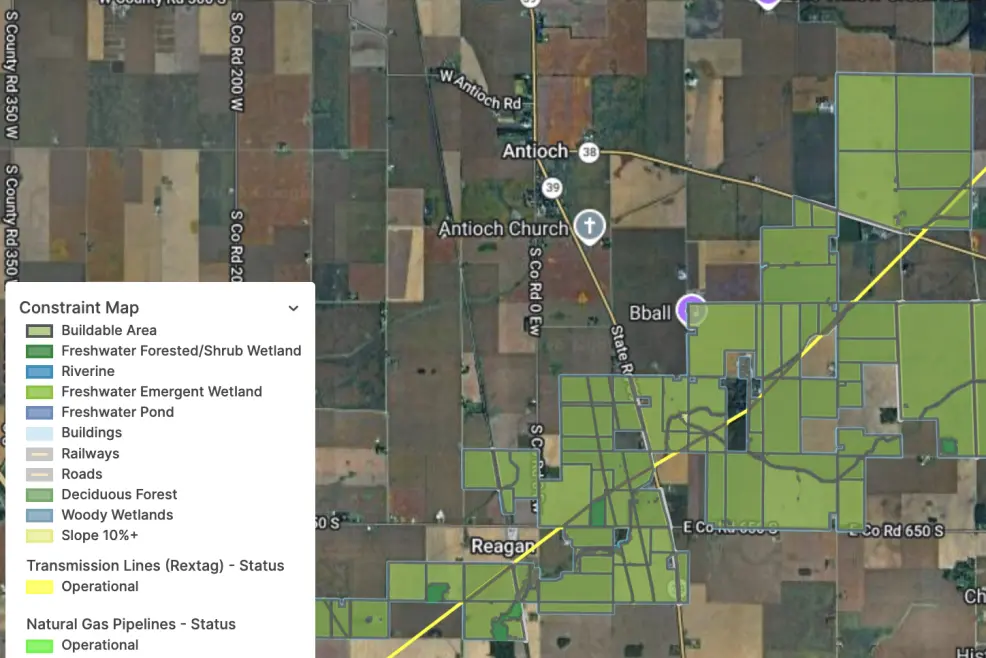
To bypass the traditional site selection bottlenecks, developers need a workflow where grid data does not live in an isolated silo. The platform offers instant, nationwide access to ISO/RTO-aligned power-flow studies, embedding grid upgrade cost analysis directly alongside:
land ownership records
topography
climate hazard data
preliminary PV layout generation & test-fits
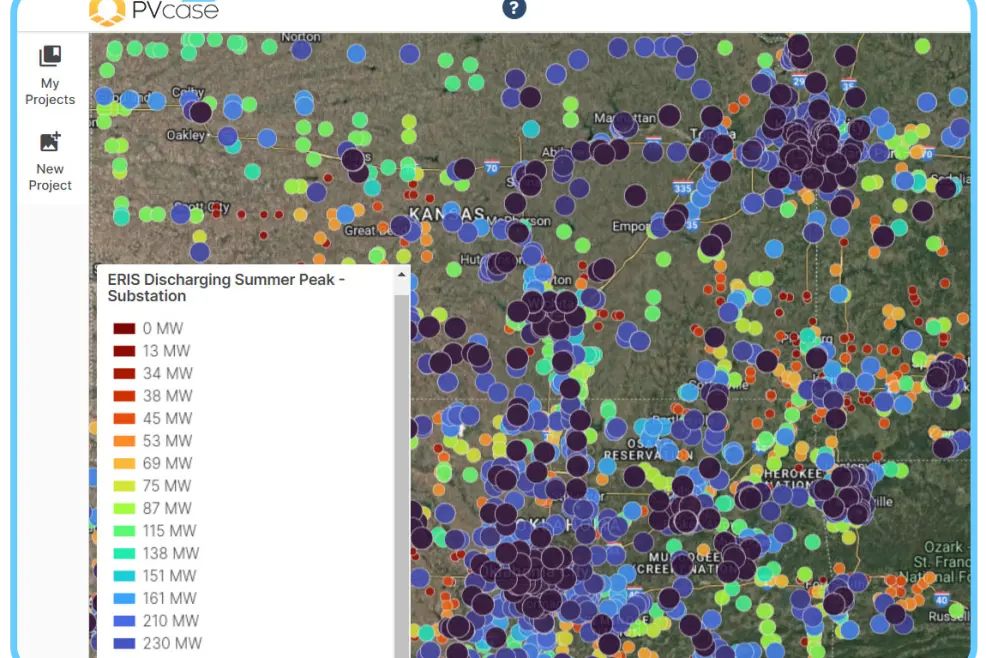
Leveraging the latest operator base cases, queue data, transmission upgrades, and retirements, the platform provides engineering-grade power-flow studies to instantly estimate precise injection and withdrawal capacity boundaries throughout the US, as well as upgrade costs for the total of the network, or allocated for specific generation and battery energy storage system sizes. This includes deregulated RTOs and strictly regulated regions like WECC, TVA, and the Southeast.
Put simply, traditional site selection heightens the risk of project failure, as teams discover hidden obstacles late in the game while faster and smarter competitors secure the premier parcels.
In the context of a globally constrained grid, energy developers (including data centers) need to adopt a unified platform that centralizes site selection and analysis with all the data such complex projects require.
PVcase Prospect's intelligence spans across the entire early-stage life cycle: whether balancing power generation or withdrawal, the platform simultaneously supports utility-scale solar, wind, battery energy storage systems (BESS), data centers, and other large energy consumers.
Explore PVcase Prospect's consultant-grade interconnection studies, market analysis, and land feasibility and de-risk your projects.