01
Market outlook
Growth expectations are nearly universal.
99%expect their regional market to grow over the next two years
91%reported a growing pipeline over the past year
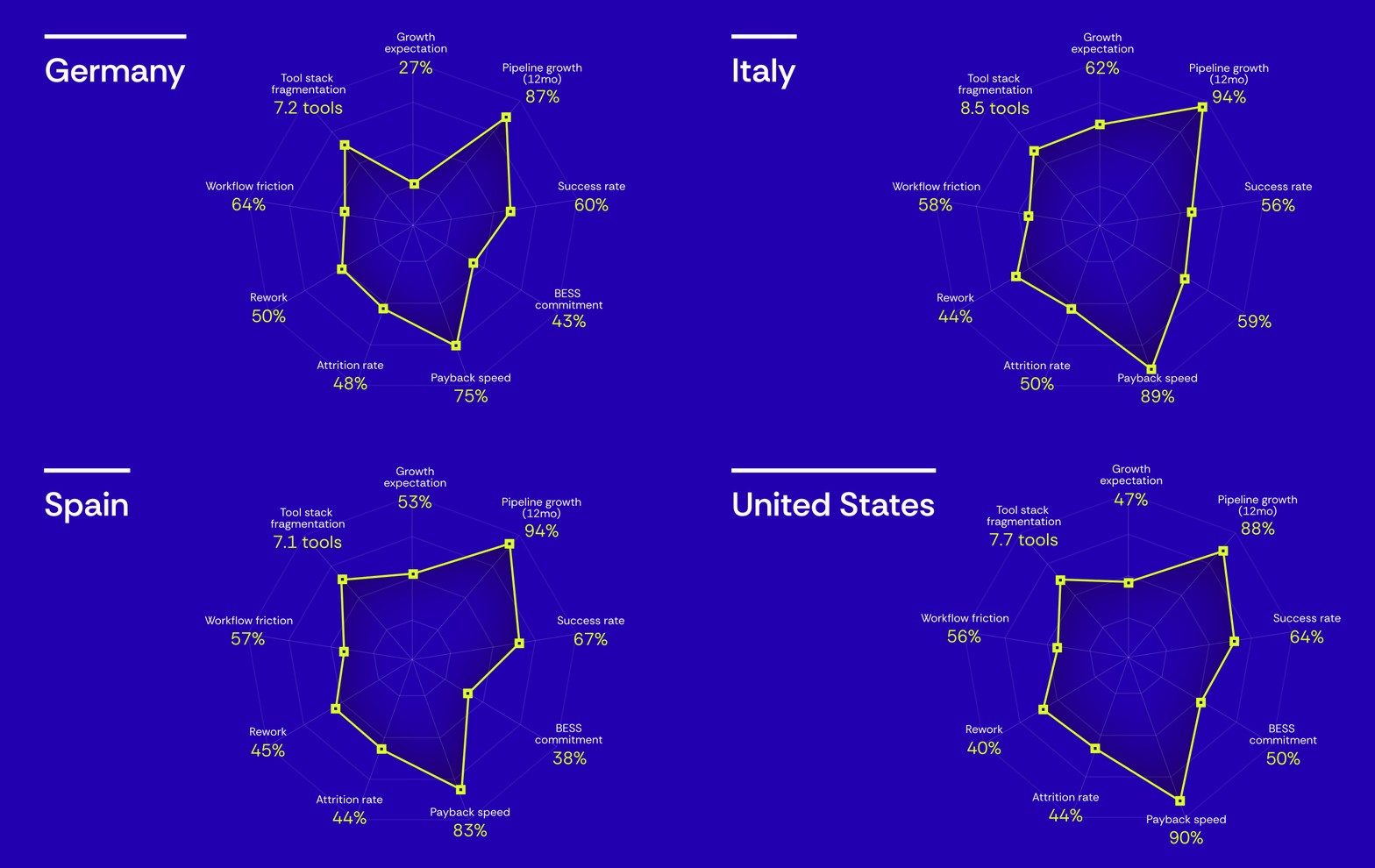
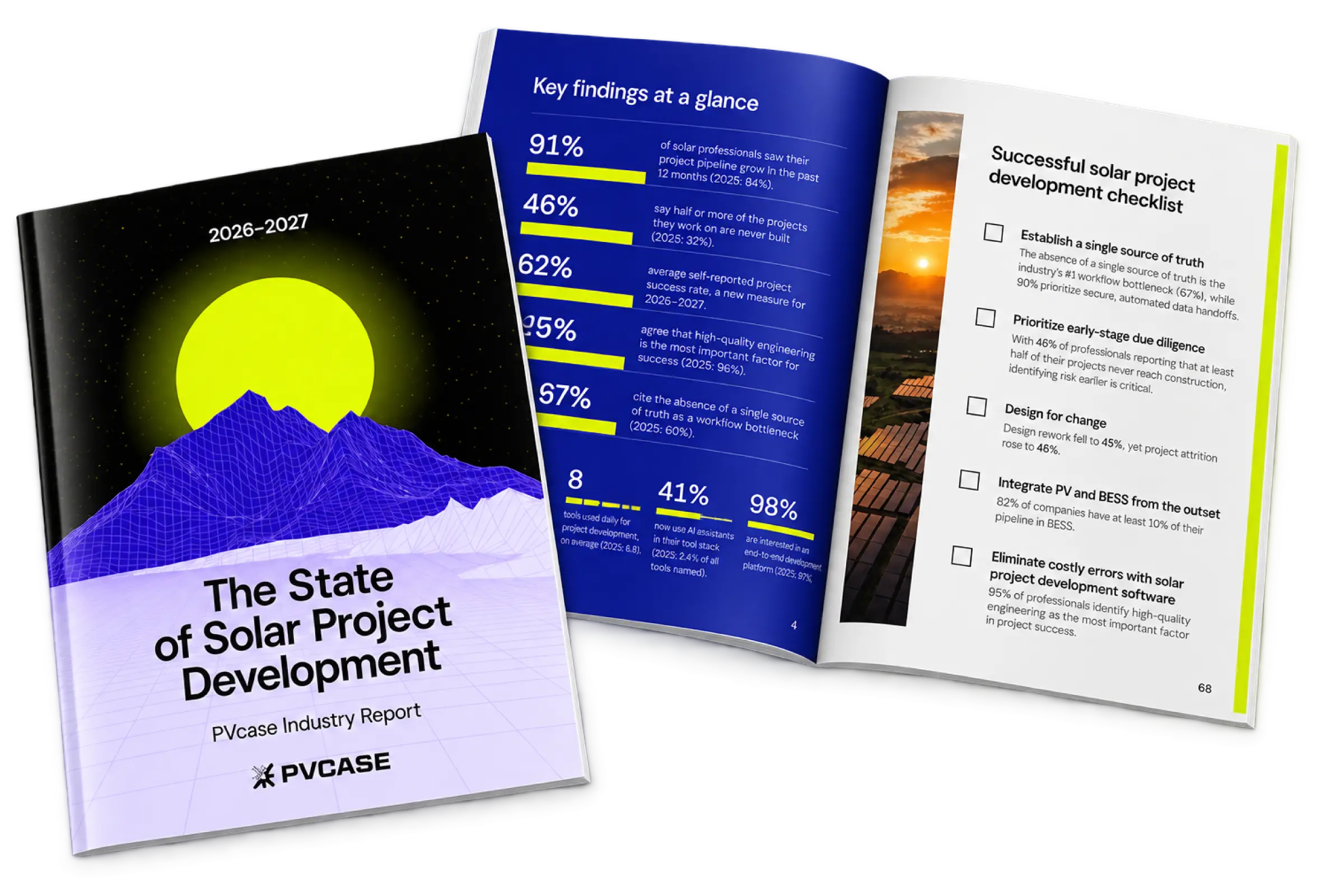
Solar’s next opportunity is turning record confidence into more successful projects. Explore insights from 405 professionals across the United States, Germany, Spain, and Italy on the risks, technologies, and workflows shaping solar development in 2026–2027.
The causes of failure remain concentrated where they were last year: in money and in permission. But the ranking beneath the top two has moved meaningfully.
say interest rates are a factor in project failure
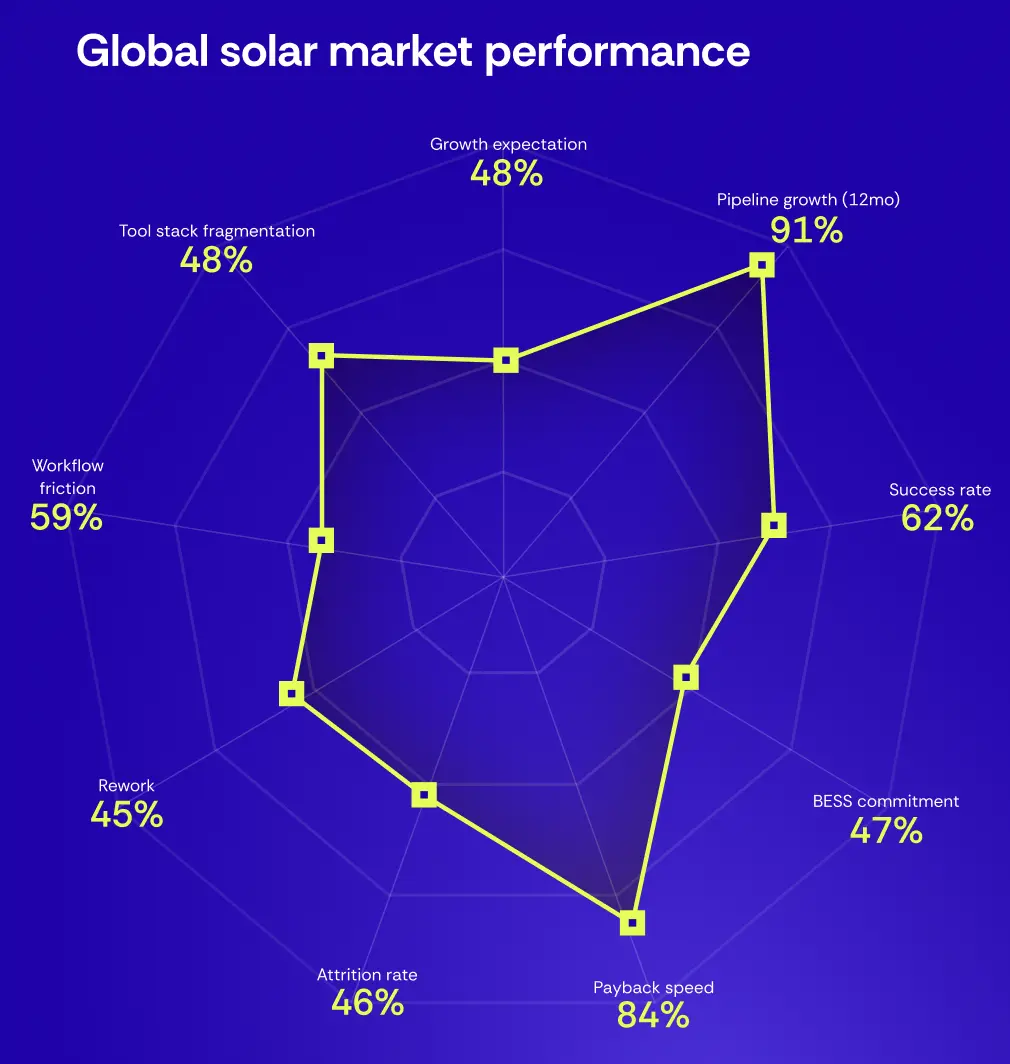
Nine in ten professionals report growing pipelines in the past 12 months, and virtually everyone expects further market growth. Yet 46% say at least half of the projects they work on never reach construction.
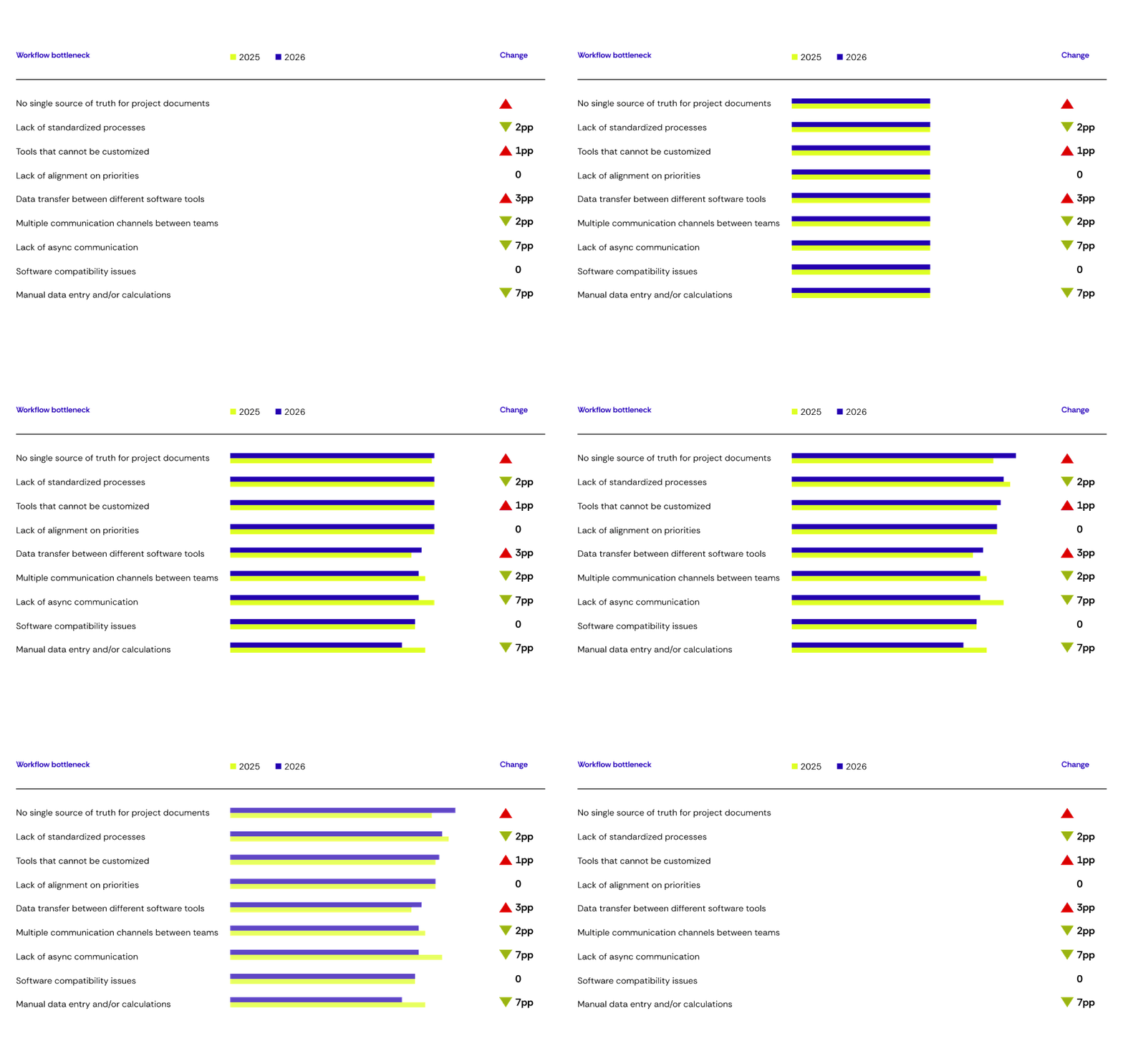
The absence of a single source of truth is the industry’s #1 workflow bottleneck (67%), while 90% prioritize secure, automated data handoffs. Connect project information across development and engineering, so teams work from consistent data throughout the project lifecycle.
With 46% of professionals reporting that at least hal f of their projects never reach construction, identifying risk earlier is critical. Screen land, permitting, interconnection, environmental, and financial constraints before committing significant engineering resources.
Design rework fell to 45%, yet project attrition rose to 46%. Build workflows that can quickly adapt to changing setbacks, capacity limits, grid requirements, and other constraints without restarting the design process.
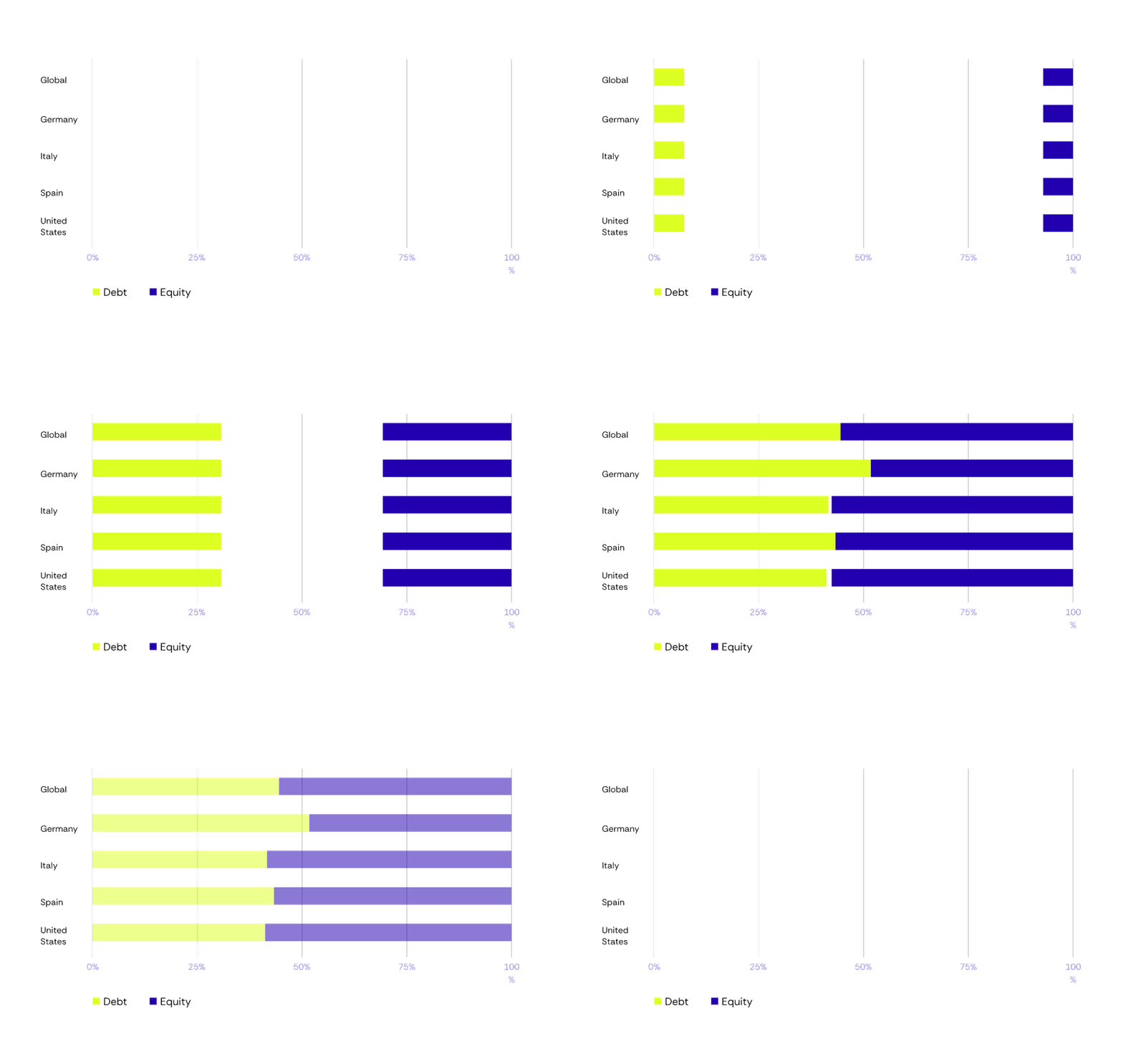
Storage is now part of mainstream solar development , with 82% of companies having at least 10% of their pipeline in BESS. Connect PV design, battery sizing, grid constraints, and performance considerations early rather than addressing them sequentially.
95% of professionals identify high-quality engineering as the most important factor in project success. Purpose - built solar software can help reduce manual errors, improve data consistency, and maintain design quality throughout development.
Get the complete analysis, data and insights shaping the future of solar project development.