Solar design software – accelerate your PV projects

Design smarter, build faster, and maximize investment potential with a modern, integrated solar system design platform.

graphic image of ground mount

What is solar design software?

Solar system design software empowers developers, engineers, and EPC managers to design solar solutions faster, build smarter, and deliver better outcomes. By optimizing solar production and maximizing yield, specialized solar design tools help teams deliver more efficient and profitable solar solutions.

Whether used for smaller commercial and industrial systems or utility-scale solar projects, the right software platform can automate tasks that once took hours of manual labor, cutting project design time by up to 90%.

The advantages offered by specialized PV design software warrant this increased investment. Benefits include:

  • Accelerated project timelines through automated design flows and reduced manual CAD work.

  • Improved design accuracy, enabled by advanced modeling tools that minimize errors and delays later in development.

  • Enhanced collaboration, allowing developers, EPCs, and consultants to work in lockstep within a single controllable environment.

  • Greater financial potential, from the selection of high-potential sites to enhanced yield optimization.

  • Scalable workflow management across single or multiple projects with finely replicable standards and processes.

Key features of professional solar design software

Today’s specialized solar design tools combine advanced automation, accuracy, and simulation to strengthen every stage of the planning process and deliver the best possible outcomes. Core capabilities include:

Automated design & layout optimization

Centimeter-level terrain adaptation for any site environment, instant layout comparisons for the best possible yields, and automated cable routing for wider infrastructure integration. Taken together, these solar system design tools eliminate manual errors and offer faster project delivery.

Advanced Shading & Yield Simulation

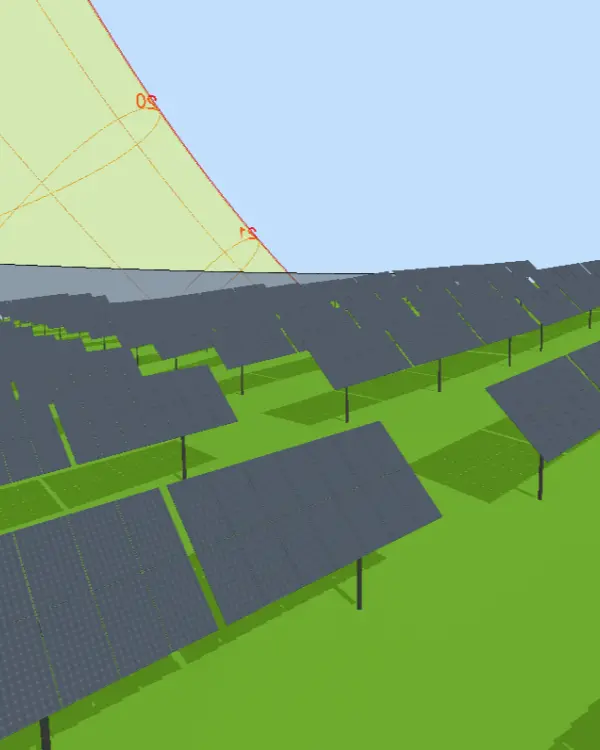
Solar energy design software takes the guesswork out of project development. Engineers and developers can identify energy losses from shading, terrain, and structure design, run numerous simulations in moments, and adapt accordingly.

3D Modeling & Visualization

High-fidelity 3D modeling and visualization tools simulate real-world conditions to an exacting standard, with multiple data layers that allow for the integration of terrain data, structural interactions, environmental elements, and more.

Electrical engineering for secure grid interconnection

Modern software for solar design must feature automated electrical engineering to generate Single-Line Diagrams (SLD) and optimize DC/AC collection systems. This ensures grid compliance and minimizes voltage drop losses, which are critical for both project bankability and long-term operational reliability.

Benefits of Using Solar Design Software

90% faster design

Advanced automation of ground-mounted and rooftop solar systems dramatically reduces development timelines.  Fully integrated solar system design software allows engineers to generate layouts, run simulations, and refine designs in a fraction of the time compared to manual CAD workflows.

Reduced data risk and human error

Centralized project data eliminates fragmented systems and version conflicts. With shared datasets and built-in validation checks, teams maintain a single source of truth across all development stages.

Better resource utilization and cost optimization

By automating repetitive engineering tasks, teams can focus on optimization and strategic decision-making. This leads to improved material efficiency, reduced rework, and stronger project margins.

In one case, 30% of engineering time was reallocated to value-added tasks.

Higher customer confidence and proposal success

Accurate designs and realistic energy projections strengthen investor trust and improve proposal win rates. Faster turnaround times provide a clear competitive advantage in a growing solar market.

Types of solar design solutions by market segment

Utility-scale solar plant design software

Utility-scale project development necessitates the management of vast land areas, often over variably complex terrain profiles, and integrated into regionally distinct grid networks.

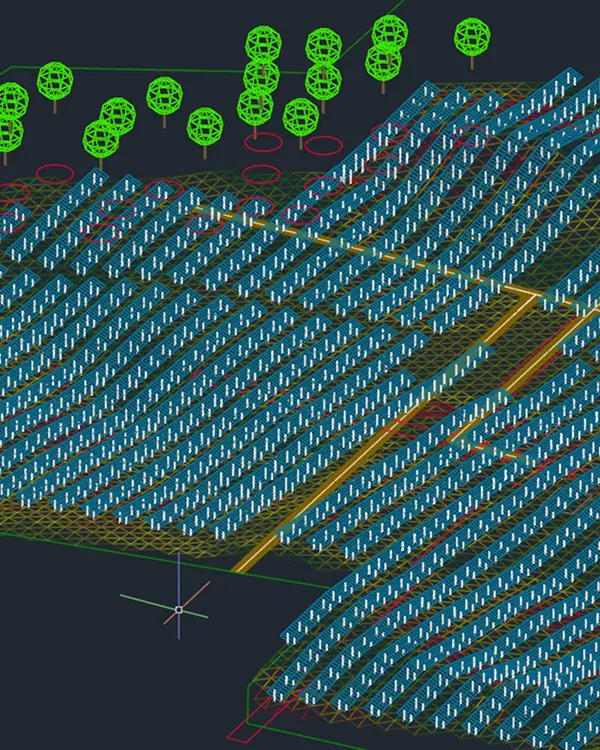
Without PV solar design software capable of automating terrain-adaptive layout generation, voltage drop calculations, and yield simulations, projects of this magnitude would be inconceivable. 

Solar system design software also helps keep the red tape in check by automatically generating compliant designs and complete reports whenever needed.

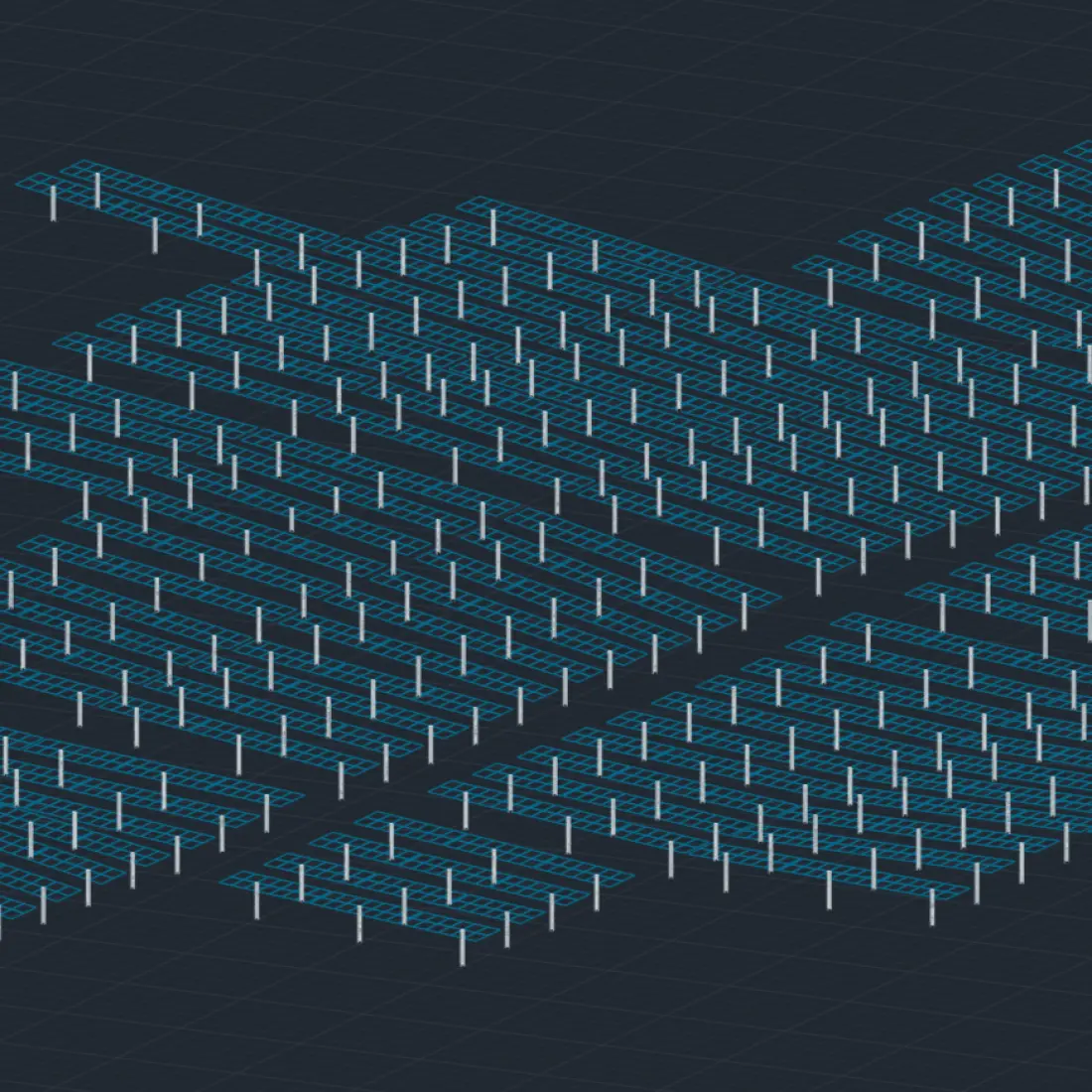
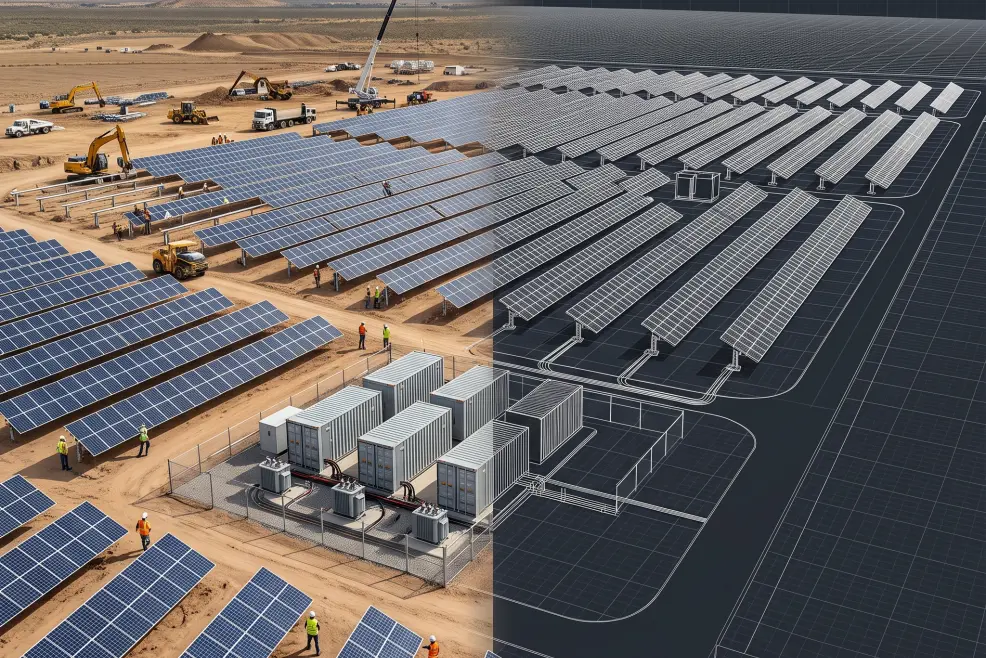
3D illustration of the layout of a utility-scale solar power plant on PVcase Ground Mount.

Commercial & industrial rooftop solar system design

C&I rooftop projects allow for accurate modeling, regardless of roof complexity or tight spatial constraints, based on a range of inputs, including images, measurements, and Google satellite data, thus creating models as close to reality as possible.

Financial modeling, energy simulation, and visual rendering enable sales engineers to offer enticing project bids to clients and empower designers to deliver on those promises. 

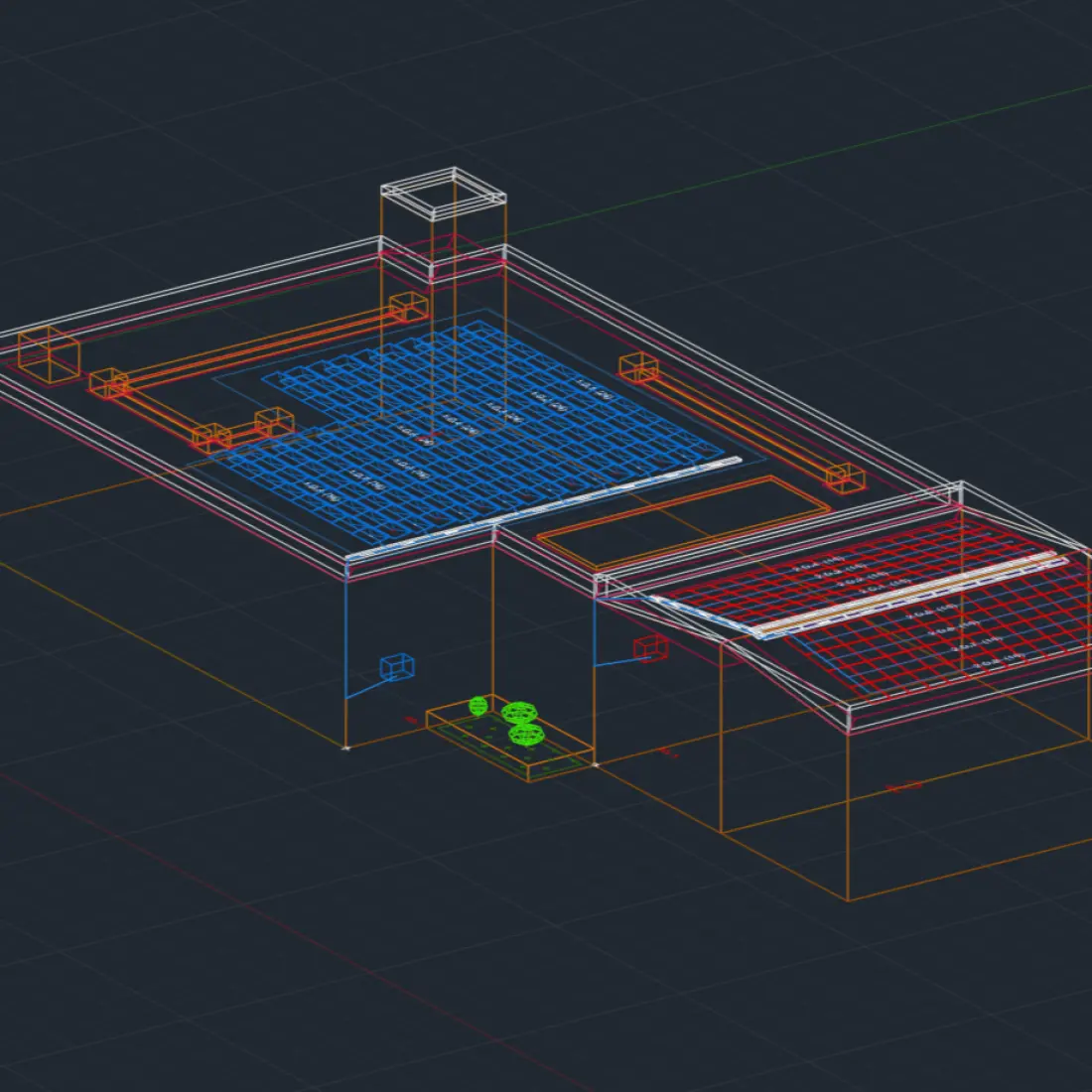
PVcase Roof Mount AutoCAD plugin interface for generating rooftop solar layouts on complex roofs

Essential solar design software & complementary tools

Professional end-to-end solar PV design software unifies processes that are traditionally handled separately – from GIS analysis to detailed design engineering and project management. Yield optimization tools are often specialized products that integrate seamlessly into this workflow.

Below is an overview of specialized tools that integrate easily into your preferred solar site or plant design software:

Trusted by industry leaders

How solar design tools transform project development

Solar system design software has reshaped the way we approach renewable energy planning and development.

The process has evolved beyond individually siloed workflows and toward a fully integrated ecosystem; one that prioritizes end-to-end solutions, streamlined integrations, and data security.

From site selection to construction-ready designs

Traditionally, the path from early feasibility to build-ready design has been reliant upon fragmented processes, manual CAD work, and time-consuming revision cycles.

Solar PV system design software automates laborious design processes and minimizes the need for revisions with precise modeling and simulation. When integrated into a broader solar project development platform, this enables stakeholders to:

  • Evaluate more potential sites.

  • Spend more time on value-enrichment tasks.

  • Offer accurate long-term yield projections.

  • Advance through development pipelines faster.

Streamlined workflow integration

Consolidating workflow across teams and ensuring optimal collaboration has long been a particular challenge of mid-to-large-scale solar power projects.

Modern solutions to asset management, version control, and real-time updating ensure standardization and project integrity, even over protracted workflows. Project managers can:

  • Connect development, engineering, and construction workflows.

  • Regulate processes and standards across teams.

  • Minimize handoff errors and project lead times.

  • Share progress across external stakeholders with ease.

Data security and risk mitigation

Information security and data integrity can be jeopardized each time sensitive data needs to be shared between platforms.

By maintaining all information within a single encrypted environment, permission-based access can be finely controlled, potential vulnerabilities eliminated, and audit trails simplified. An overview of advantages include:

  • Secure storage with role-based access and monitoring.

  • Clear version histories for transparency and compliance.

  • Comprehensive failsafes against data loss or corruption.

  • Integrated clash detection tools to eliminate data inconsistencies.
Choosing the right solar panel system design software

PVcase: Leading solar design software platform

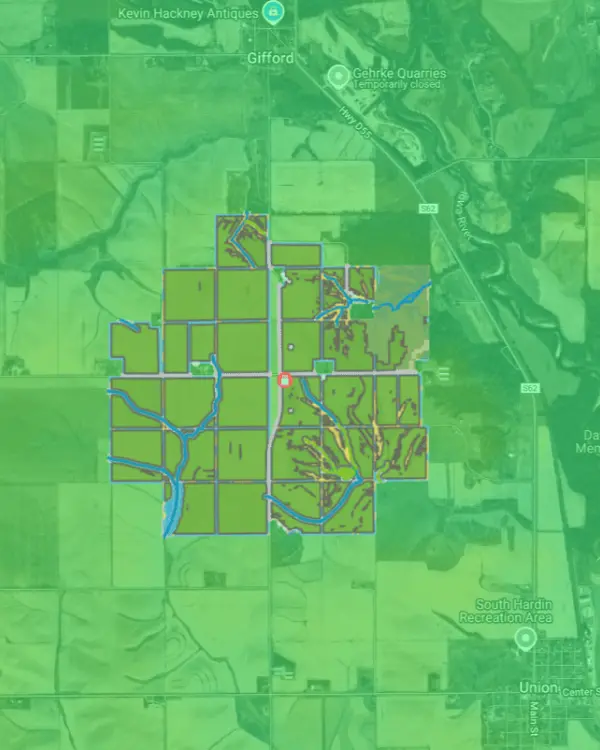
PVcase is an end-to-end solar project development platform that brings together site selection, PV design, and yield estimation. Central to this platform, PVcase Ground Mount is powerful solar design software that delivers optimized terrain adaptability, automated electrical design, and flexible configurations for any utility-scale project. It integrates seamlessly with PVcase Prospect for site selection and restriction assessment, and PVcase Yield for precise energy simulation – connecting every step from early-stage prospecting through to detailed design and accurate yield projections. This integration eliminates the friction of working across disconnected tools, enabling teams to move faster and more confidently through every stage of project development.

80%
decrease in design time
<5mins
to analyze site
3x
more layouts in one day

ROI & Business Impact of Solar Design Software

By enabling project developers to identify the optimal site and cut design time by up to 90%, PVcase offers a safe return of investment. Furthermore, through enhanced accuracy and delivery times for proposals, our solar system design tools have been found to improve product win rates from 12 to 15%. In short, integrating PVcase into your project means improved margins, streamlined workflows, and stronger investor confidence. Discover how we drive greater efficiency, informed decision-making, and better outcomes.

background imagebackground image

Solar that sees the
light of day