Customer stories
How Sol Source Power connected three tools into one PVcase ecosystem
June 22, 2026

Client
UKA
Location
Global / Germany
Industry
Renewable energy development
Employees
1000+
Founded in Germany in 1999, UKA develops, plans, builds, and operates renewable energy projects across Europe and the Americas. UKA has established a strong position in wind development while expanding into utility-scale solar and battery storage.
Sabah Yousfi
Project Engineer at UKA
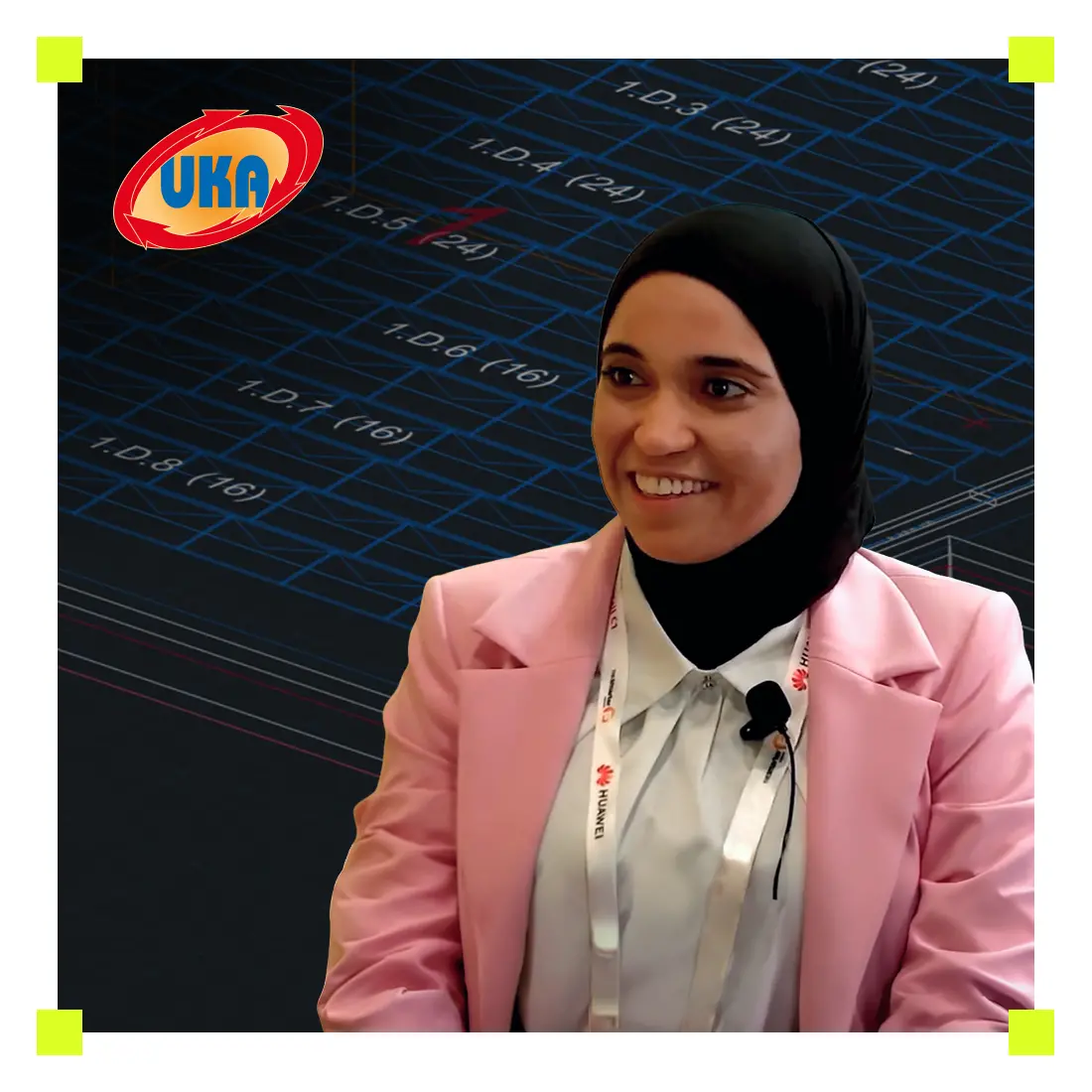
Before joining UKA and experiencing PVcase, Sabah Yousfi relied on AutoCAD and manual calculations to develop project layouts. Every design change required significant rework, making iterations slow and limiting how many options engineers could evaluate.
Repetitive drafting absorbed time that could otherwise go toward engineering judgment. Comparing alternatives was difficult because every new configuration created another round of manual planning.
Scenario evaluation introduced another layer of work. Engineers had to export each design into a comprehensive yield-estimation tool, then define the project location, components, losses, and other inputs before running the calculation. Finding the optimal balance between energy production, available land, and engineering constraints often meant testing numerous layout variations — something that was difficult with manual workflows.
As UKA expanded its engineering capabilities, maintaining consistent design quality across teams became increasingly important. With multiple engineers contributing to the same projects, UKA needed a workflow that made files, assumptions, and knowledge easy to share — ensuring every design remained clear and workable as it moved between colleagues.
Sabah Yousfi
Project engineer, UKA
UKA adopted PVcase as its primary solar project development platform, enabling engineers to complete utility-scale layouts within one connected workflow instead of relying on disconnected CAD processes.
UKA’s engineers can develop and iterate layouts in PVcase Ground Mount. UKA reports that the team can complete planning, discuss the result, and move to the next project step within 1-3 hours.
QuickYield is built into PVcase Prospect and PVcase Ground Mount. Within UKA’s PVcase Ground Mount workflow, engineers can run fast energy-yield estimates while designing — without moving every option into a more comprehensive yield-estimation platform. This immediate feedback helps the team to compare early iterations, assess performance, and eliminate weaker alternatives before investing time in a full analysis.
Built-in QuickYield feature enables UKA to compare scenarios earlier and narrow as many as 20 options to the strongest two or three. The team then continues with PVcase Yield to confirm the optimum variant.
The connected workflow gives UKA’s engineers more time to evaluate trade-offs instead of preparing every scenario for a comprehensive yield study. Design and early performance feedback happen together, while comprehensive validation remains available for the options that merit deeper analysis.
Projects that previously required days or even weeks of manual drafting can now typically be completed within one to three hours, allowing engineers to focus on optimization rather than repetitive CAD work.
PVcase QuickYield makes early comparisons practical throughout the design process. Engineers can explore alternatives before committing to the detailed setup required for comprehensive validation.
Rather than carrying as many as 20 scenarios through separate comprehensive calculations, the team can identify the most promising two or three based on early yield estimates and focus the next stage of analysis.
All four solar engineers leverage PVcase Ground Mount, supporting continuity when projects move between colleagues and making it easier to share files, ideas, and new knowledge across the team.
Use PVcase Ground Mount and built-in QuickYield feature to design and compare project scenarios earlier, then validate the strongest options with PVcase Yield.