Blog
PVcase product updates: summer edition
June 30, 2026
PVcase Products


PVcase fall updates are here, bringing more precise site analysis, smarter design automation, and consistent component data across PVcase Prospect, PVcase Ground Mount, and PVcase Yield.
Canada availability: Evaluate sites using localized Canadian grid, pipeline, parcel, zoning, and buildable-area data.
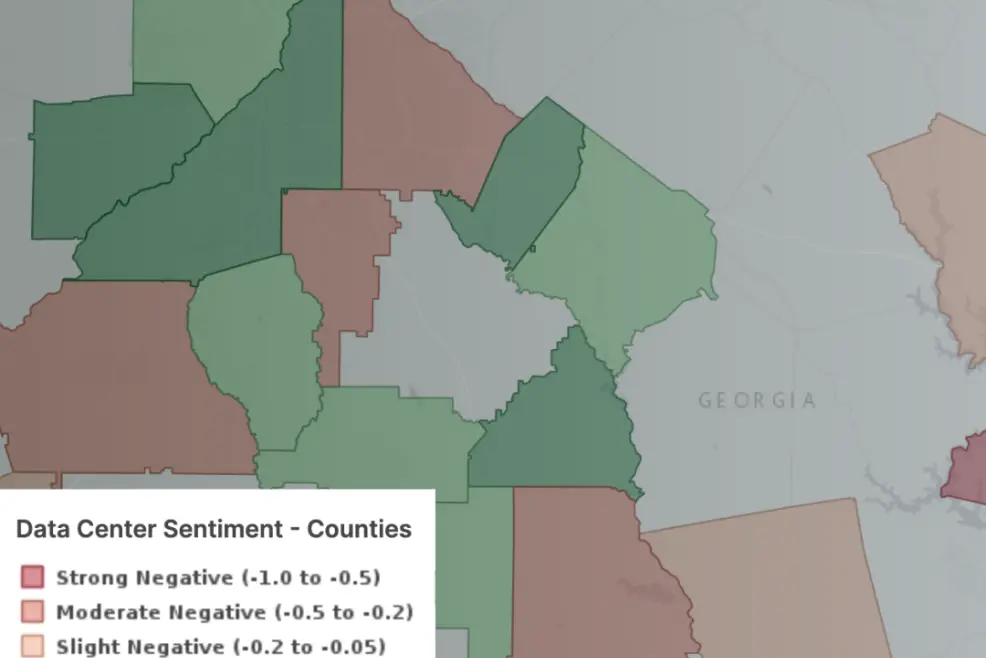
Solar Community Sentiment: Explore county-level stakeholder sentiment for solar projects.
POI ranking: Compare Points of Interconnection using weighted technical and cost criteria.
Predictive flood mapping: Use First Street's updated 2026 model without reconfiguring saved templates.
Component Database: Work with verified module and inverter data from a centralized cloud source.
PVCollada 2.0: Carry tracker geometry and terrain data into yield simulations.
TFT placement optimization: Reduce grading volume through automated two-directional frame generation.
KML export enhancements: Control which project elements appear in GIS exports.
Component Database: Synchronize module and inverter data across the PVcase ecosystem.
Multiple module power classes: Model physical strings using their exact power classes.
Organization loss presets: Share consistent loss assumptions across teams.
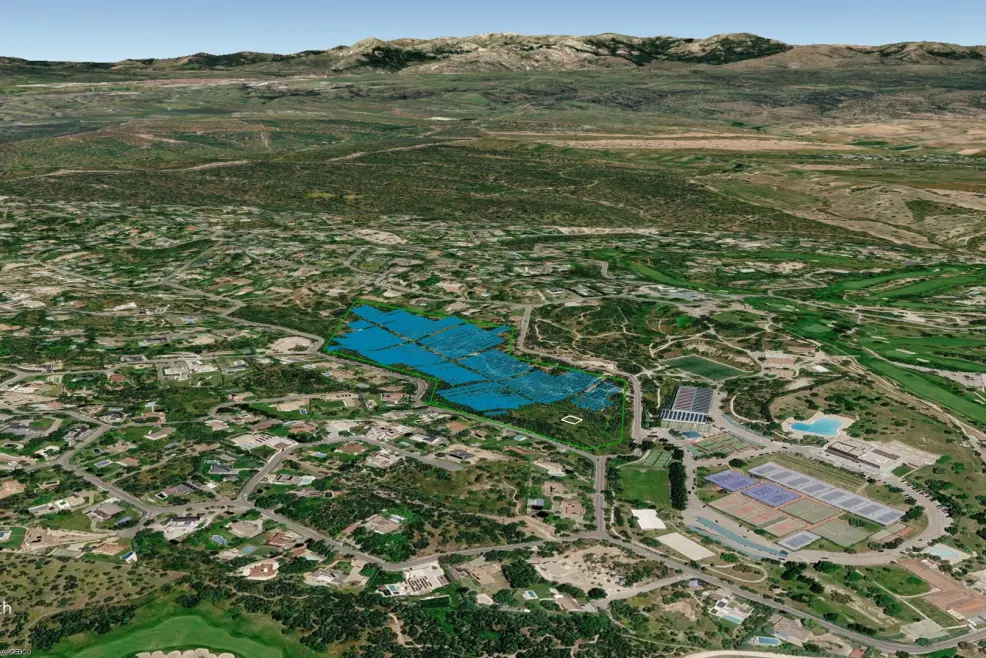
PVcase Prospect is now available in Canada. You can now evaluate sites using fully localized mapping for grid infrastructure, pipelines, parcels, zoning, and buildable area analysis.
This single national offering provides native Canadian units, projections, and labels.
You can now access county-level community sentiment tailored specifically for solar projects directly within the PVcase Prospect map interface.
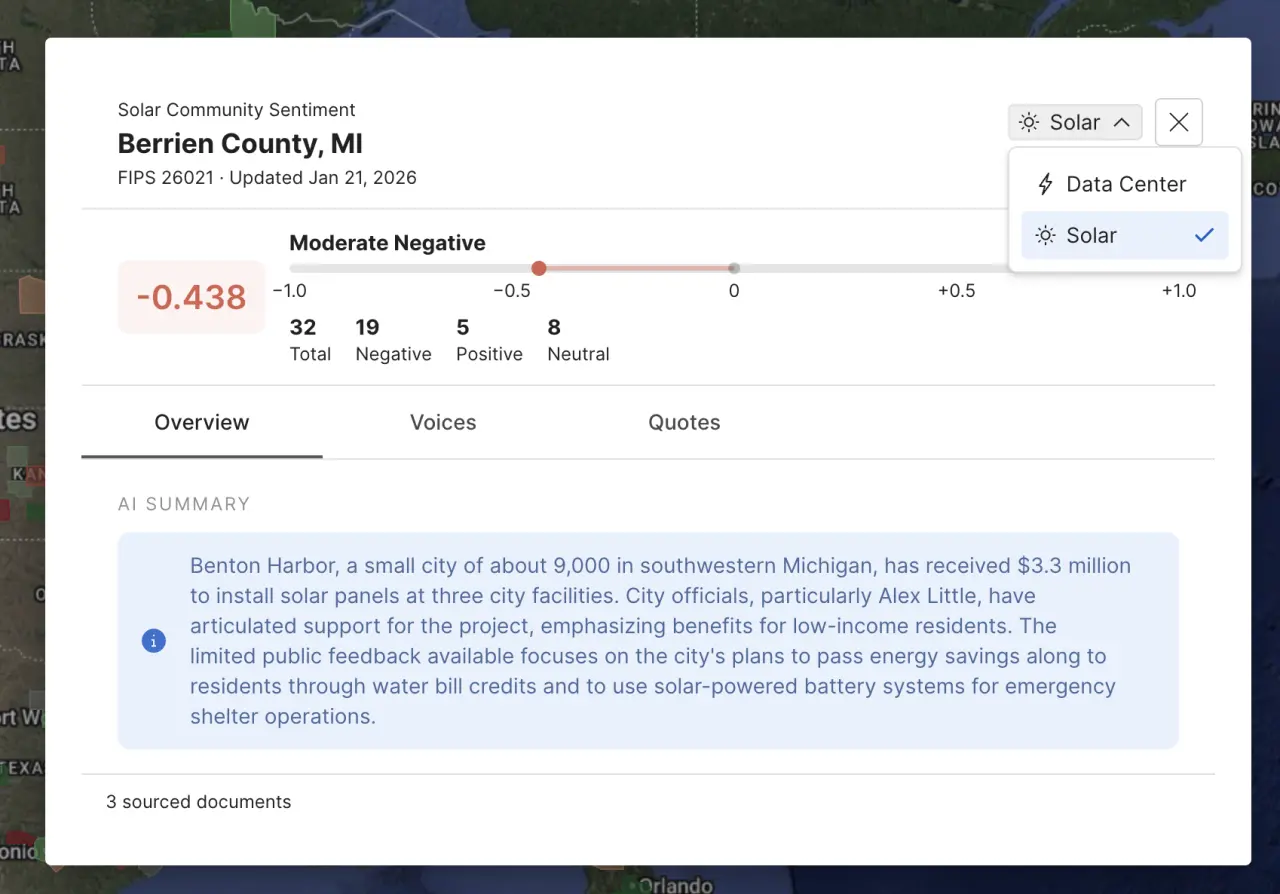
A redesigned intelligence brief modal and an interactive project type toggle allow developers to instantly switch between Solar and Data Center contexts to view localized stakeholder stances, score histories, and representative quotes.
Score and rank Points of Interconnection (POIs) directly inside your Project Assets tables without exporting data to external spreadsheets.
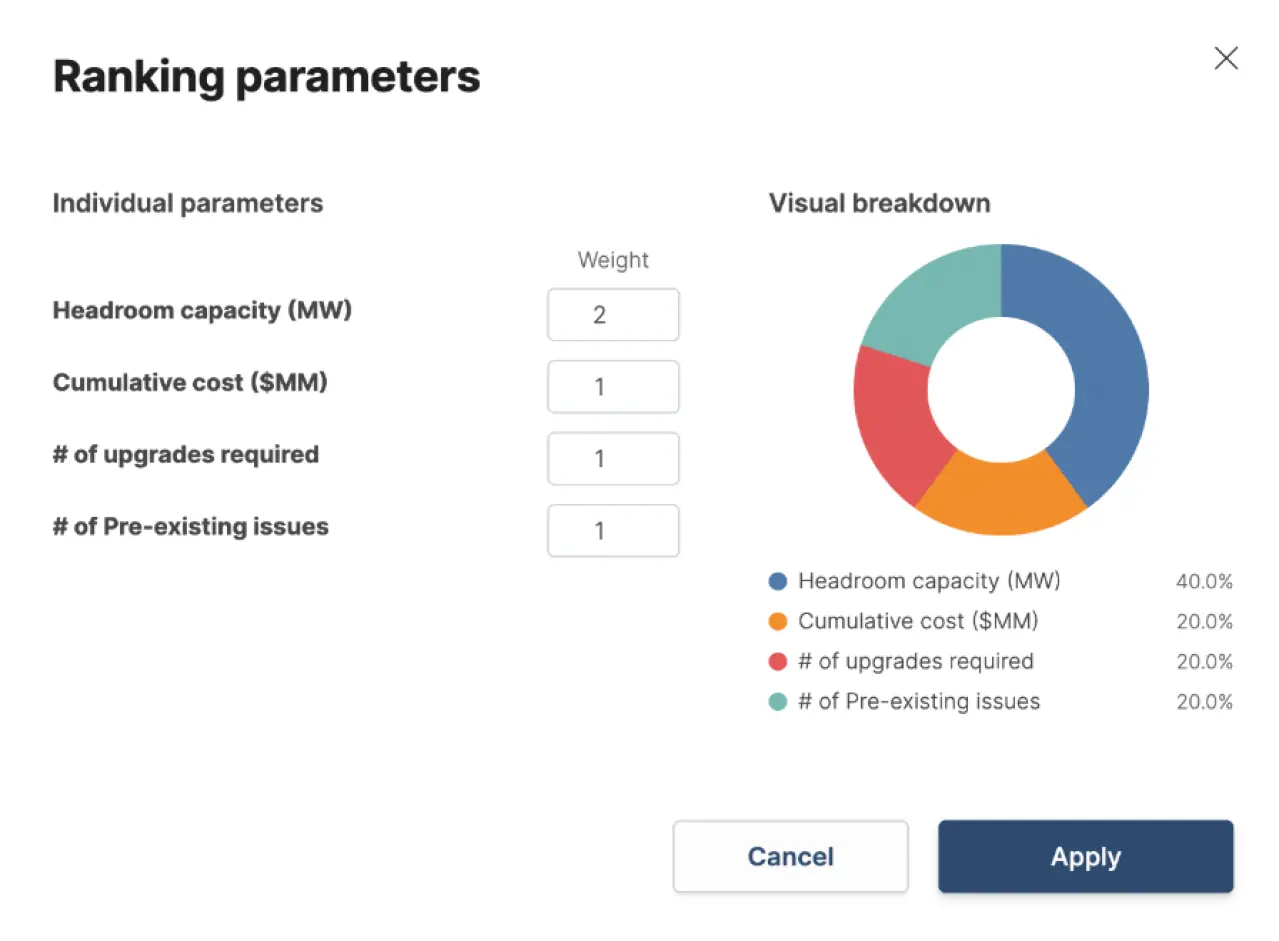
Set custom weights across headroom capacity, cumulative costs, required upgrades, and pre-existing issues. PVcase Prospect calculates real-time composite scores to instantly order connection points from most to least favorable.
First Street's updated 2026 model for Predictive Flood Mapping is now available in your Buildable Area Analysis (BAA) settings and Layer Catalog.
This update incorporates advanced hydraulic modeling for improved flood accuracy while preserving all saved BAA templates and favorited layers
Access trusted, consistent component data directly within PVcase Ground Mount through a centralized cloud database.
When configuring frames or sizing inverters, engineers can select verified module and inverter models from a simple dropdown list or upload custom PAN and OND files.
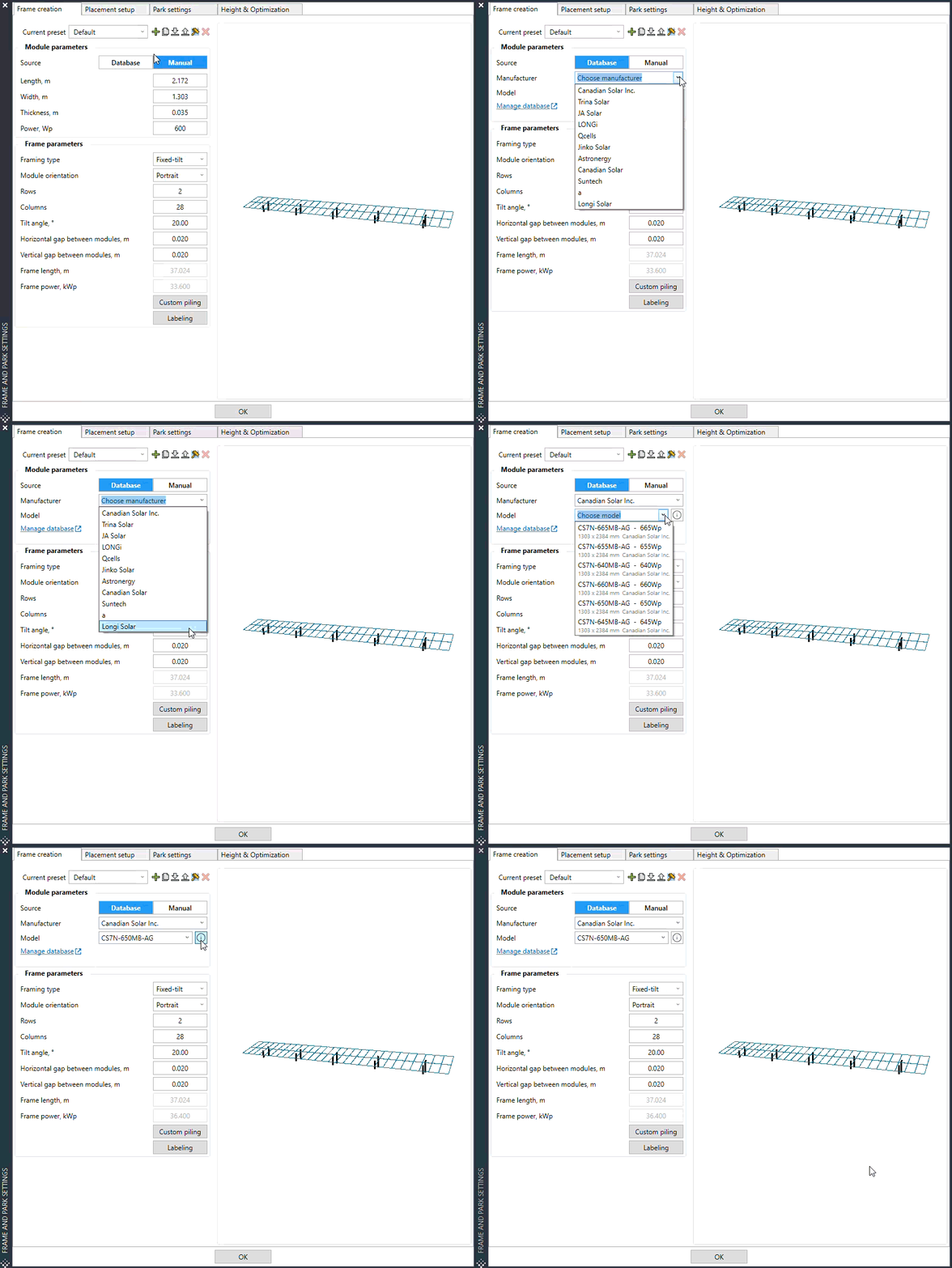
Connected manufacturer and DNV-certified data reduces manual parameter transcription and specification errors while accelerating setup across design, simulation, and cabling workflows.
Export layouts in the new .pvc2 format, co-developed with PVsyst to streamline the handoff between layout design and yield simulation.
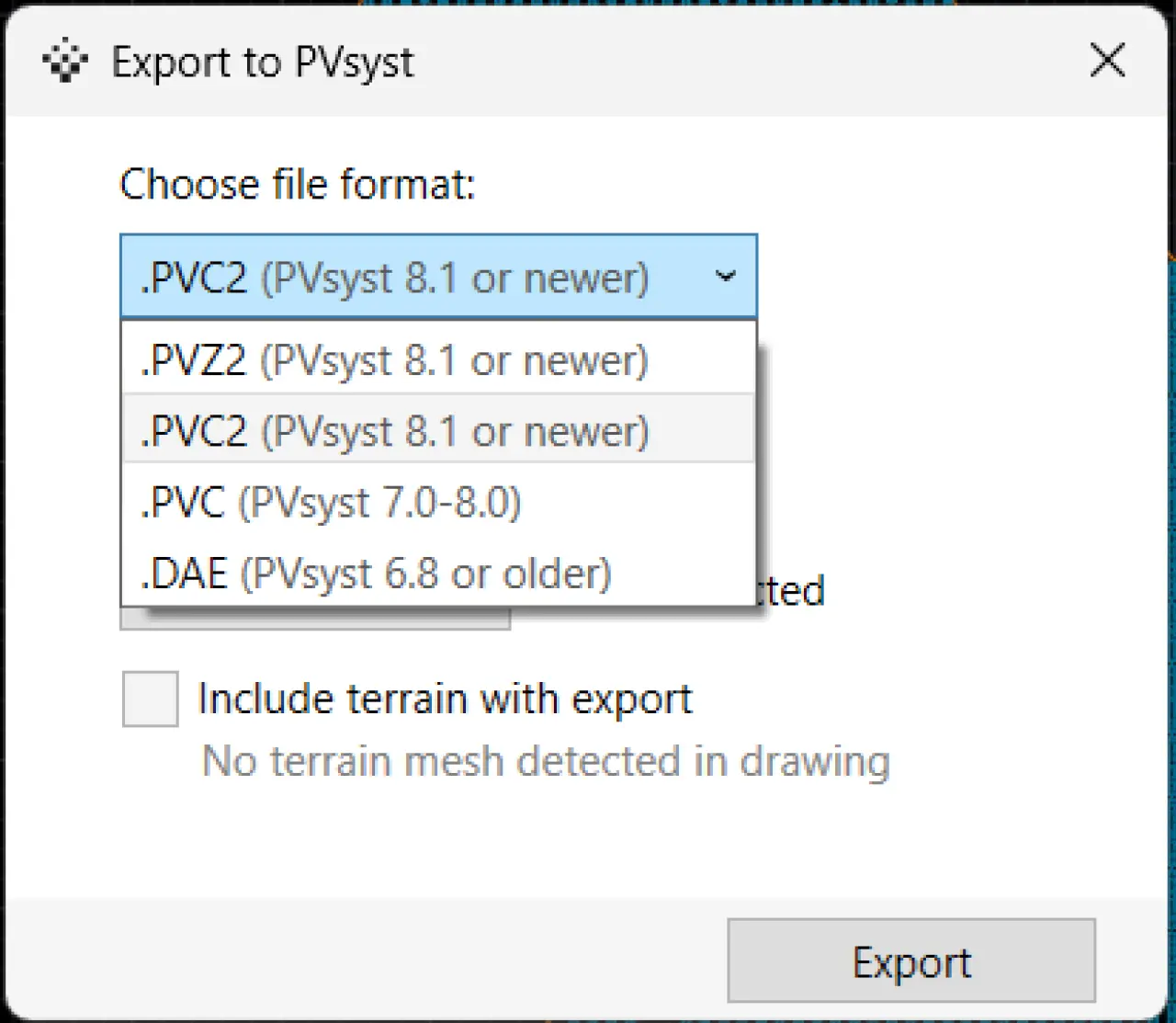
The format automatically embeds tracker torque tube, joint, and motor gap geometry into the export file alongside the terrain mesh. This prevents file alignment offsets and removes the need for manual reconfiguration.
Additionally, full COLLADA 1.5 compliance guarantees smooth model rendering in external 3D tools, while expanding overhang support to all frame types
Optimize earthworks for Terrain-Following Trackers (TFT) through automated two-directional frame generation inside AutoCAD and Civil 3D.
The algorithm detects problem frames and re-generates them from the opposite direction, retaining the result that requires the least cut and fill.
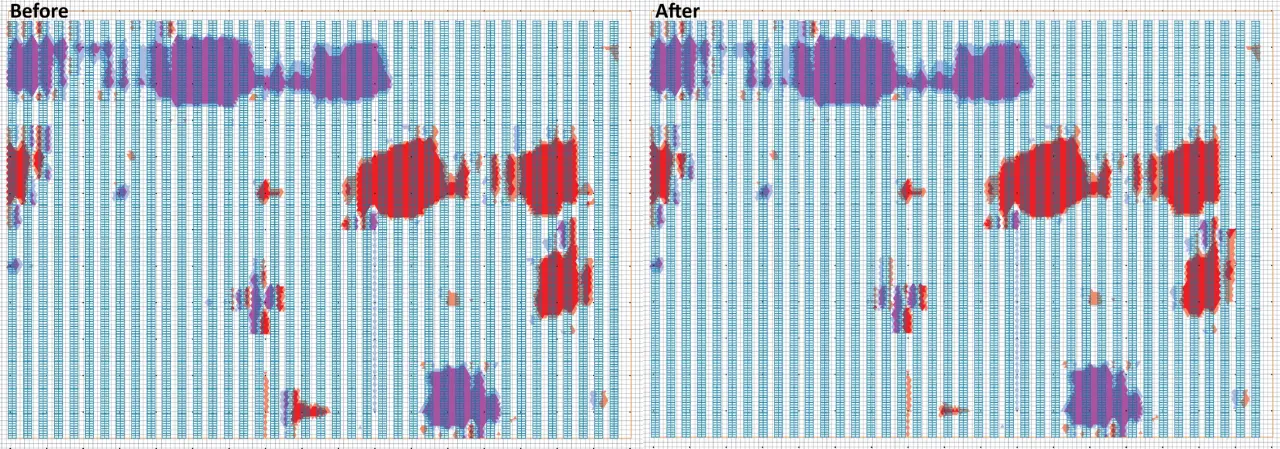
This process eliminates manual heat-map scanning and "swap preset" workarounds. It reduces grading volume reduction of at least 6% on average without adding site-wide calculation delays.
Tailor your GIS visualization exports by selecting which project elements to include, including areas, frames, piles, shading objects, electrical transformers, and roads.
The update preserves true rectangular and circular pile geometry for maximum layout accuracy in third-party software.
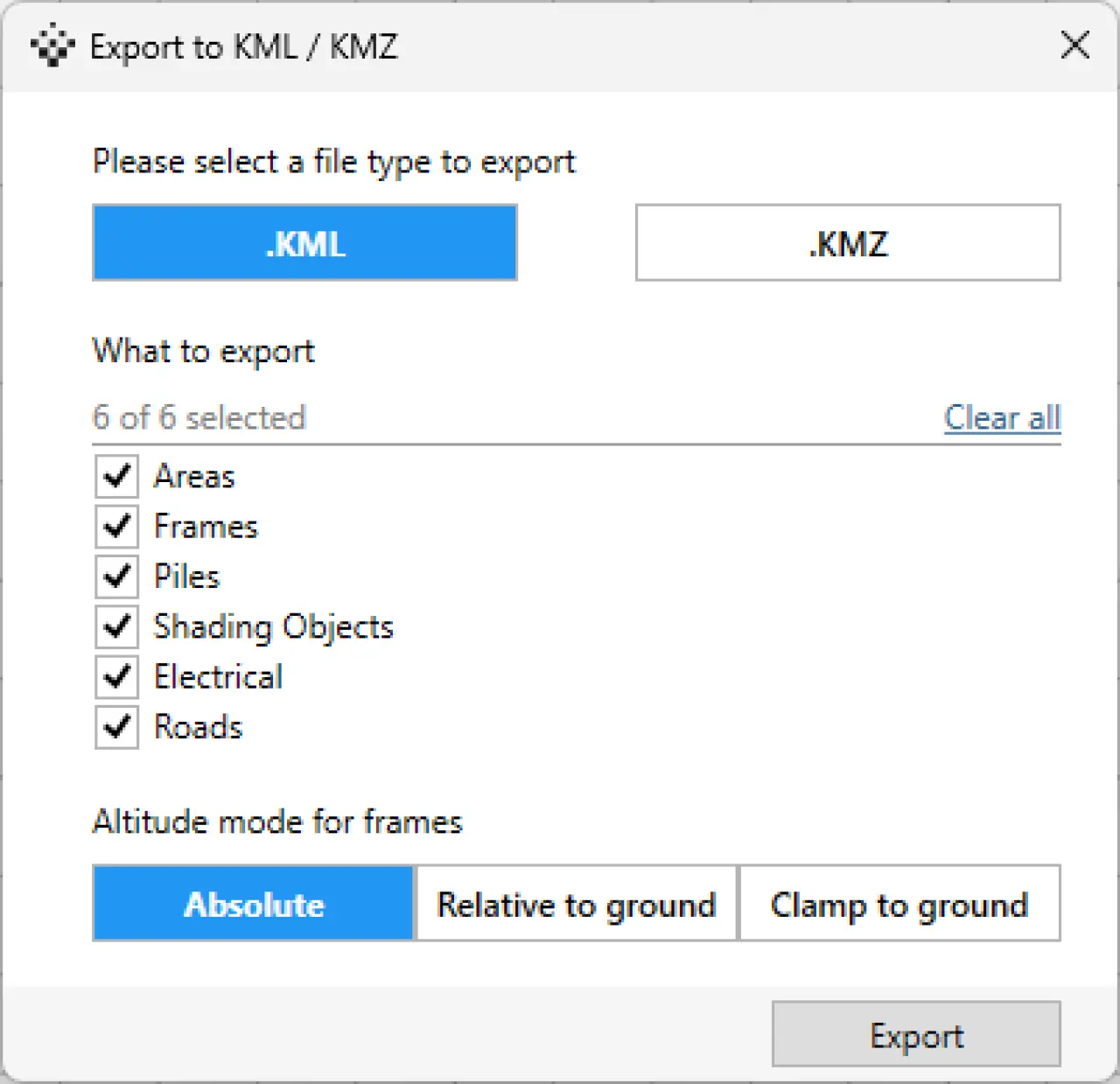
Furthermore, three new frame placement modes — Absolute, Relative to ground, and Clamp to ground — ensure structural frames adapt precisely to terrain elevations and eliminate visual clipping
Please note: These features are available in version 2.64. Be sure to update PVcase Ground Mount to access them.
Access a centralized, cloud-based library of module and inverter data directly in PVcase Yield.
The Component Database replaces outdated legacy libraries and features AI-powered datasheet parsing to extract specifications from uploaded PDF datasheets.
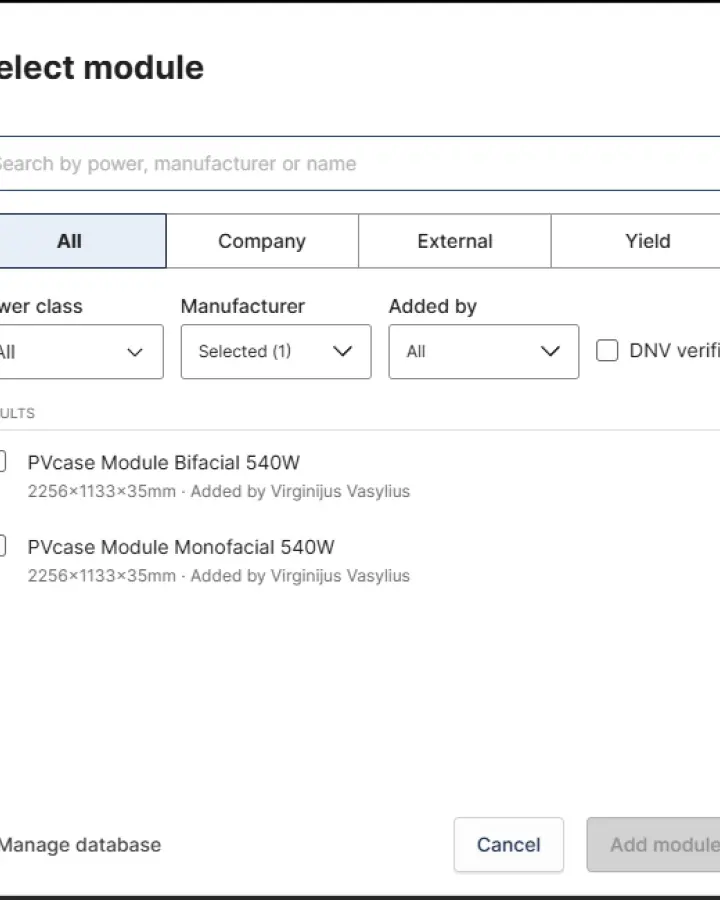
Component parameters synchronize across the entire PVcase ecosystem without manual data re-entry, while an Activity Log tracks every modification and creator for complete audit transparency.
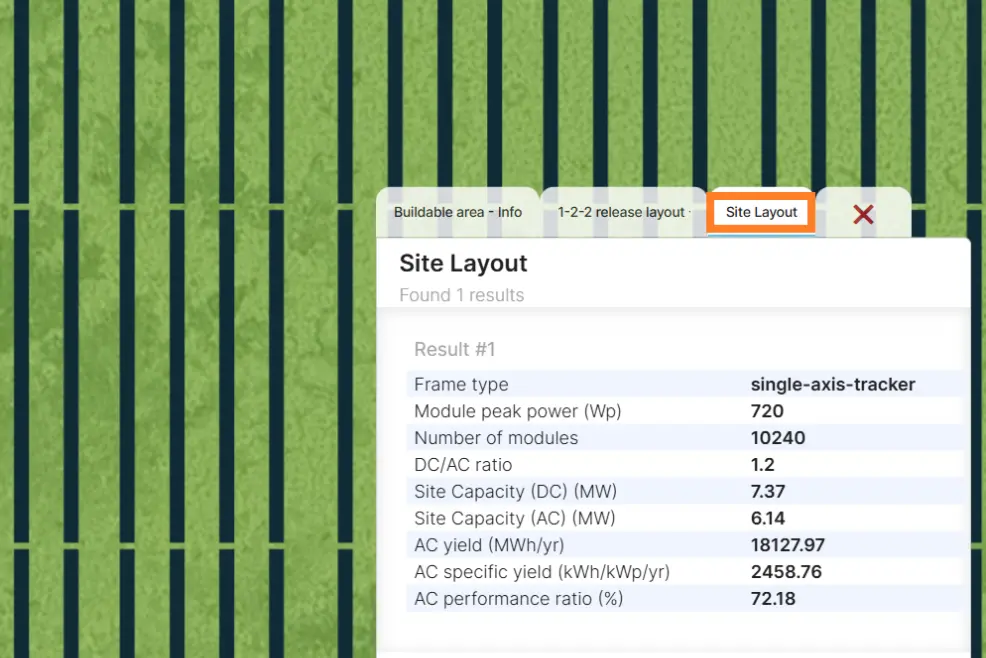
Simulate layouts with multiple module power classes alongside complete DC electrical designs exported directly from PVcase Ground Mount.
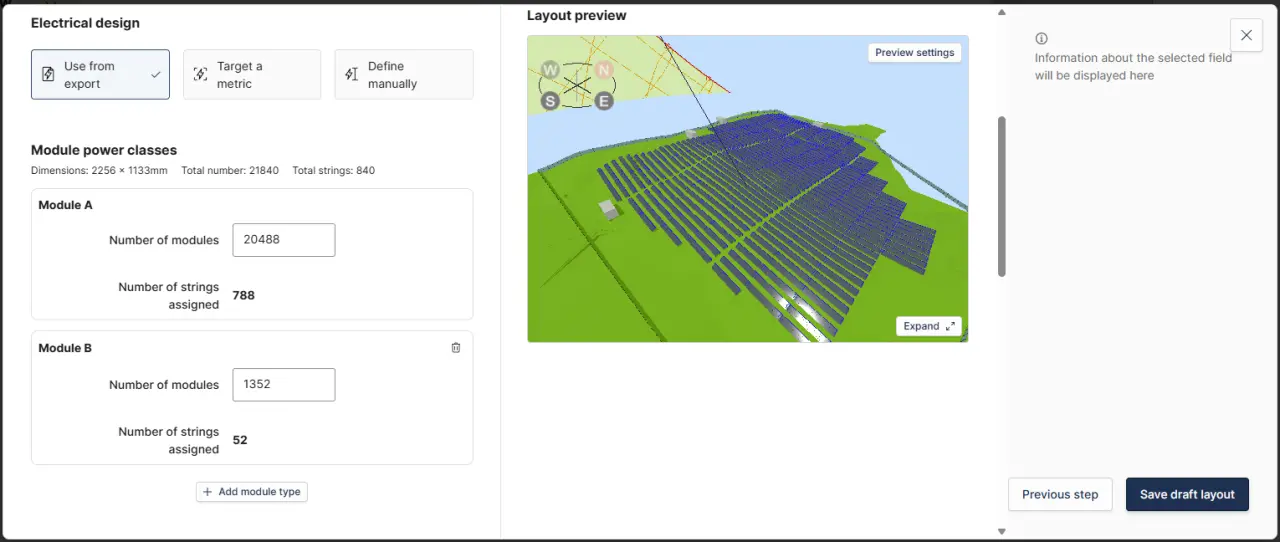
Instead of relying on plant-wide averages that assume an even distribution of the equipment, the system maps concrete physical strings to their exact module power categories.
This string-level connection unlocks higher simulation accuracy, allowing engineers to model real-world variables like wiring and energy mismatch at the individual inverter level.
Save and share loss configurations company-wide by selecting "Save losses as an organization preset" from the Loss presets menu in PVcase Yield.
Organization presets make approved loss settings available across team accounts without requiring users to clone entire projects. Personal presets remains intact for individual modeling requirements.
Level up your next project — book a personalized meeting to move solar forward.