

Webinars
On-demand webinar: Transmission planning 101 for project developers
August 27, 2025

This case study evaluates a 200 MW data center development in Columbus, Ohio, to demonstrate how unifying grid capacity analysis, land siting, and site feasibility into a single platform provides early visibility into development risks — including local zoning and community sentiment — before committing significant capital.
QUICK TAKE
Early data center projects face major hurdles across grid capacity, critical infrastructure mapping, power market volatility, buildable parcel availability, community sentiment, and zoning approval.
Evaluating new development opportunities traditionally forces project developers to juggle GIS tools, public utility filings, spreadsheets, and disconnected teams. These expose projects to the following obstacles:
Finding grid capacity within budget: Entering interconnection queues without a detailed transmission analysis exposes developers to massive sunk costs and unviable grid upgrade costs.
Determining critical infrastructure: Manual evaluation of fragmented, expensive datasets slows down site identification in high-competition markets where developers need immediate access to fiber data for data centers alongside gas and power infrastructure.
Assessing power market economics: Significant geographic variation in wholesale electricity prices introduces financial basis risk that erodes long-term operating margins unless developers adopt a power-first data center strategy early in site selection.
Locating viable, buildable parcels: Individual parcel dropouts during due diligence make site-by-site land screening inefficient for building a scalable project pipeline.
Uncovering community sentiment: Assessing local resistance across fragmented municipal records and news coverage is difficult to perform consistently at scale, risking mid-development delays without dedicated data center community sentiment insights.
Understanding zoning requirements: Navigating non-standard local zoning rules, overlay districts, and AHJ requirements introduces significant early-stage entitlement risk that can be mitigated by leveraging zoning data for site selection.
QUICK TAKE
PVcase Prospect unifies grid capacity modeling, land siting, and feasibility analysis into one workflow, eliminating manual studies and unexpected development risks.
Modern data center site selection rarely comes down to finding one thing. A promising grid connection still needs the right land nearby. The land needs access to fiber and other critical infrastructure. The economics need to work. And even when the technical conditions align, zoning, buildability, or community sentiment can determine whether the project moves forward.
Each answer narrows the search — and each new constraint can change which opportunity is worth pursuing.
PVcase Prospect brings these considerations into one workflow, connecting interconnection analysis, site selection, and site feasibility. Instead of evaluating each factor independently, developers can progressively narrow the search from grid opportunity to land and, ultimately, a site that meets the broader requirements of the project.
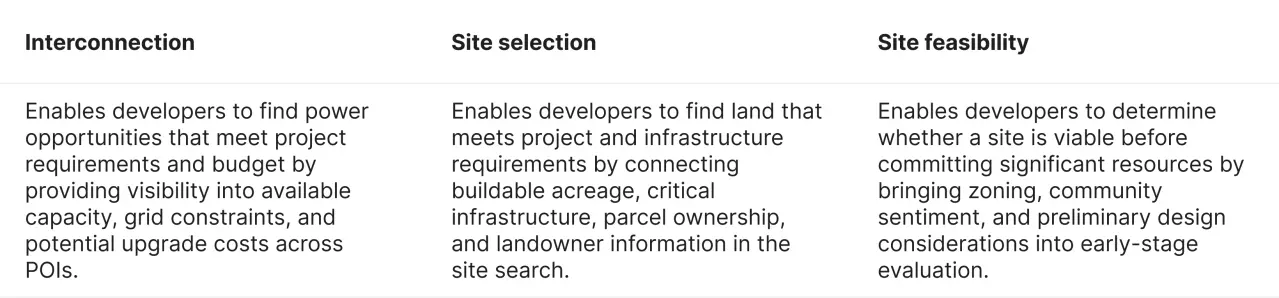
Each of these three stages adds another layer of information to the development decision, enabling the team to determine whether an opportunity is worth advancing before committing significant time and capital.
QUICK TAKE
Our project in the Columbus, Ohio area surfaced a site featuring 269.7 MW grid capacity and 205.3 buildable acres, exceeding all campaign parameters.
To see this workflow in practice, we set out to to identify a high-quality site and point of interconnection (POI) for a 200 MW data center opportunity in the Columbus, Ohio area that meets the following development criteria:
Target project size: 200 MW
Upgrade cost budget: $4 million
Interconnection voltage: 138 kV
Buildable land requirement: 200 acres
Land ownership: Single landowner
The search identified a site with 269.7 MW of grid capacity and 205.3 buildable acres, exceeding the campaign’s target requirements for both power and buildable land.
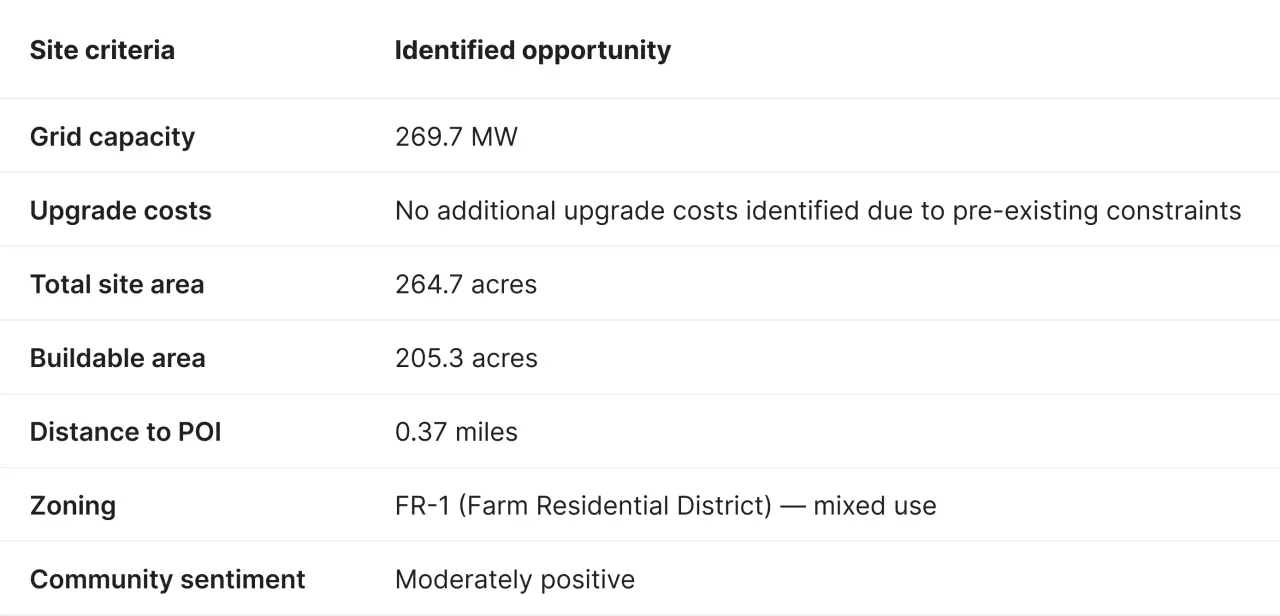
Community context: Active projects in the area indicate development precedent. At the same time, growing county-level opposition and the governor’s stance against large-scale data centers introduce additional considerations for development.
QUICK TAKE
The PVcase Prospect early development process follows seven steps, evaluating point-of-interconnection capacity, upgrade costs, surrounding infrastructure, power market economics, buildable parcels, local sentiment, and preliminary 3D test fits.
Starting with the campaign parameters for Columbus, Ohio, the search put each of these capabilities into practice. The result was a potential opportunity that exceeded initial targets — and a clearer picture of what it would take to move it forward. Let’s have a look at the step-by-step process with PVcase Prospect.
Knowing that a massive backlog of projects currently chokes the grid at almost every point of interconnection (POI), we started the search with power. PVcase Prospect provides offtake capacity, limiting constraint, and estimated upgrade cost information across potential POIs. Backed by PVcase Prospect’s best-in-class power-flow analysis, developers understand where the grid may accommodate a proposed load and where network constraints could require additional investment.
Rather than entering the interconnection process with limited visibility, developers can use these findings to focus further site analysis on POIs that better align with the project's power requirements and budget.
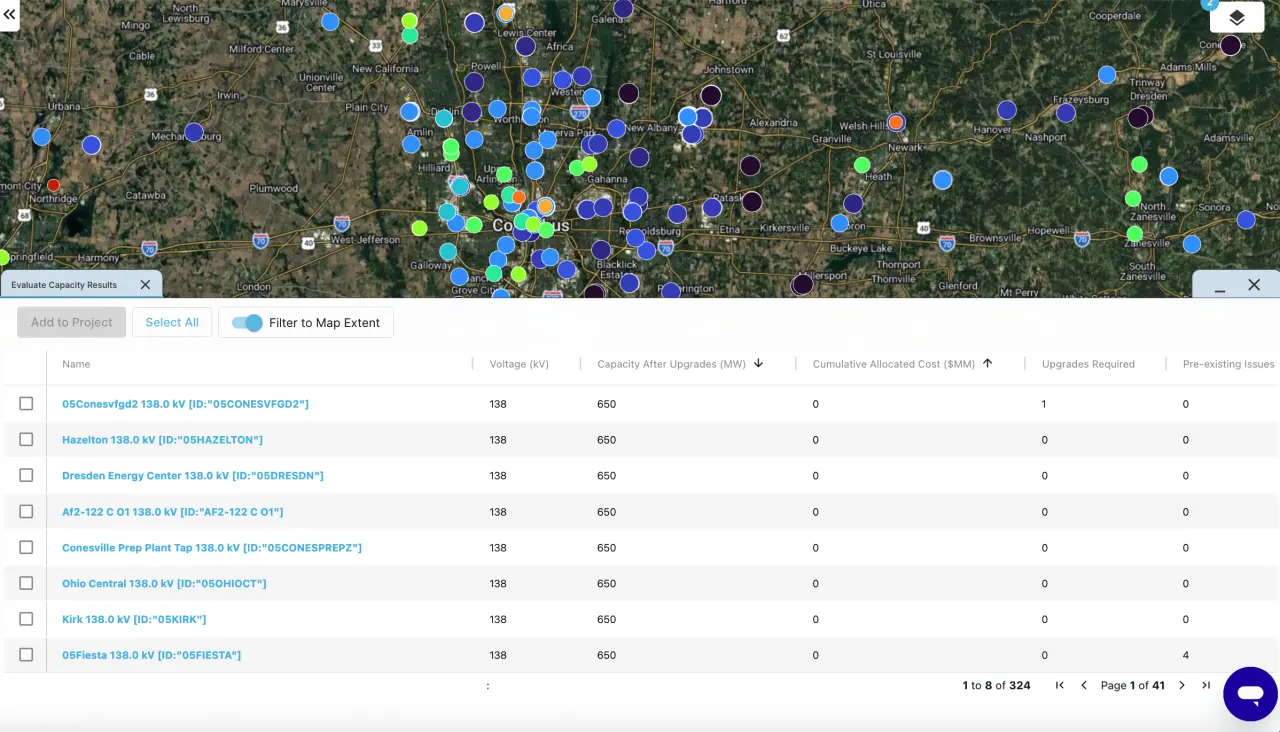
Available capacity alone does not determine whether an interconnection opportunity works economically. The impact on the grid — and therefore potential upgrade costs — changes with the size of the proposed project.
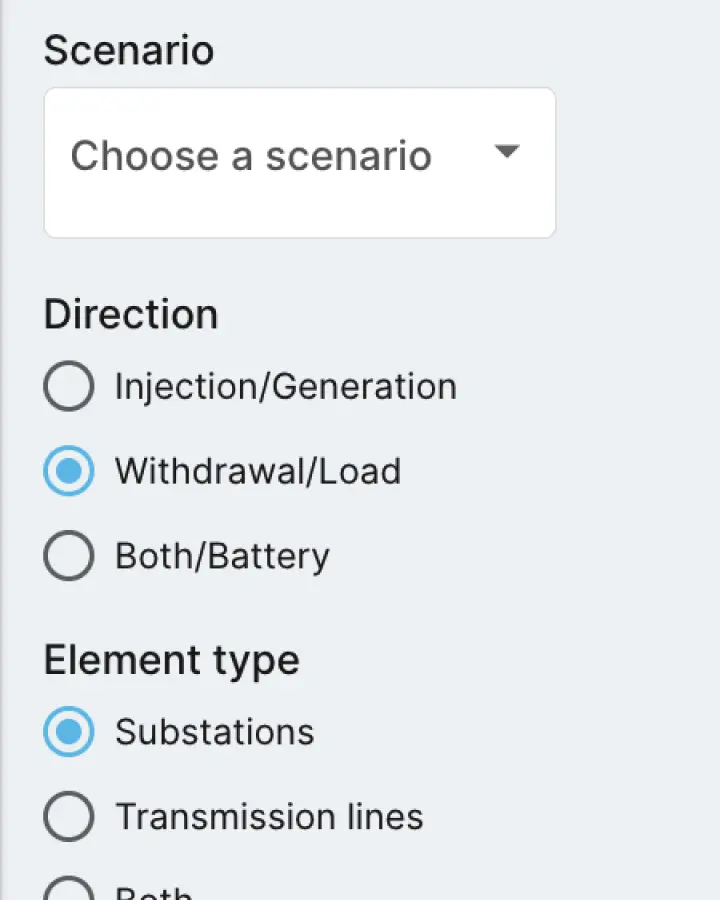
With PVcase Prospect, developers can analyze different project sizes against estimated grid upgrade requirements. This makes it possible to compare capacity and cost together and determine how much load a location could support within the project's upgrade budget.
For a large data center, that distinction matters: a POI with available capacity may still be unattractive if the required upgrades materially change project economics.
Learn how PVcase Prospect’s power-flow modeling assesses transmission constraints and predicts grid upgrade liabilities in our capacity analysis e-book.
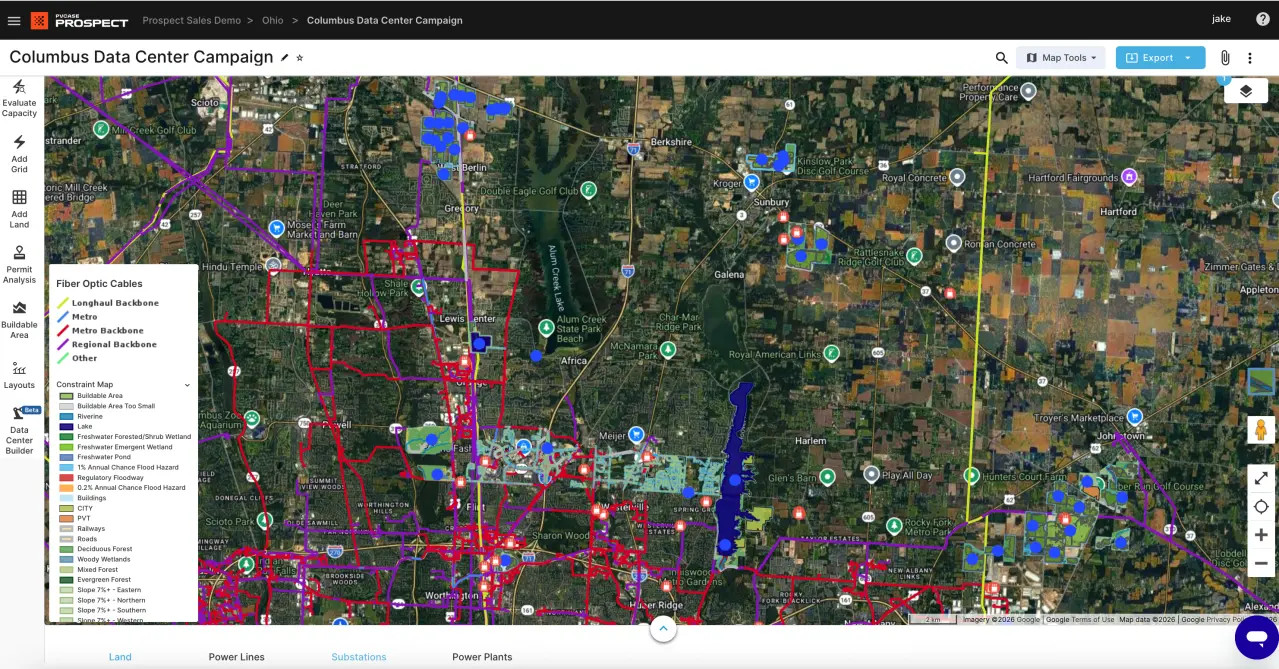
After identifying promising grid locations, we used PVcase Prospect’s infrastructure datasets to evaluate what surrounded each opportunity. PVcase Prospect brings together mapping datasets covering grid infrastructure, fiber networks, internet exchange points (IXPs), pipelines, existing data centers, pricing information, and other relevant layers. Developers can evaluate these conditions alongside one another rather than sourcing and cross-referencing each dataset separately.
The analysis brought grid infrastructure together with fiber networks, internet exchange points (IXPs), pipelines, existing data centers, pricing information, and other relevant layers.
Viewing these conditions together helped narrow the search to areas where suitable power was supported by the broader infrastructure requirements of a data center campus — without having to source and cross-reference each dataset separately.
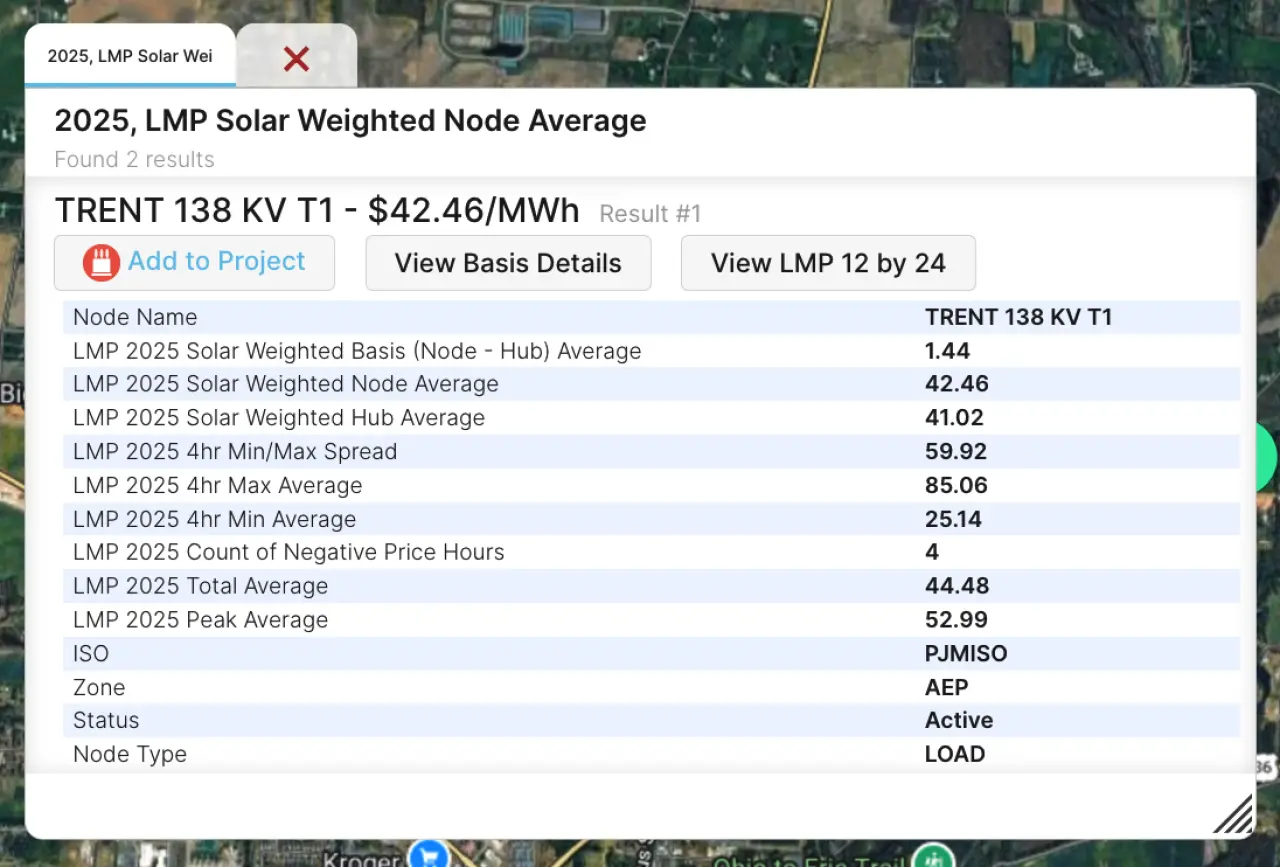
Grid capacity and upgrade costs answer whether a project may be able to connect. Power market data adds another question: what could operating at that location mean economically?
With PVcase Prospect’s historical power pricing and basis information, developers can use to compare market conditions between potential locations. These differences can be significant for large, energy-intensive loads, even between sites separated by relatively short distances.
Bringing this information into site selection earlier helps developers surface potential basis risk, compare opportunities more comprehensively, and enter PPA discussions with greater context around local power economics.
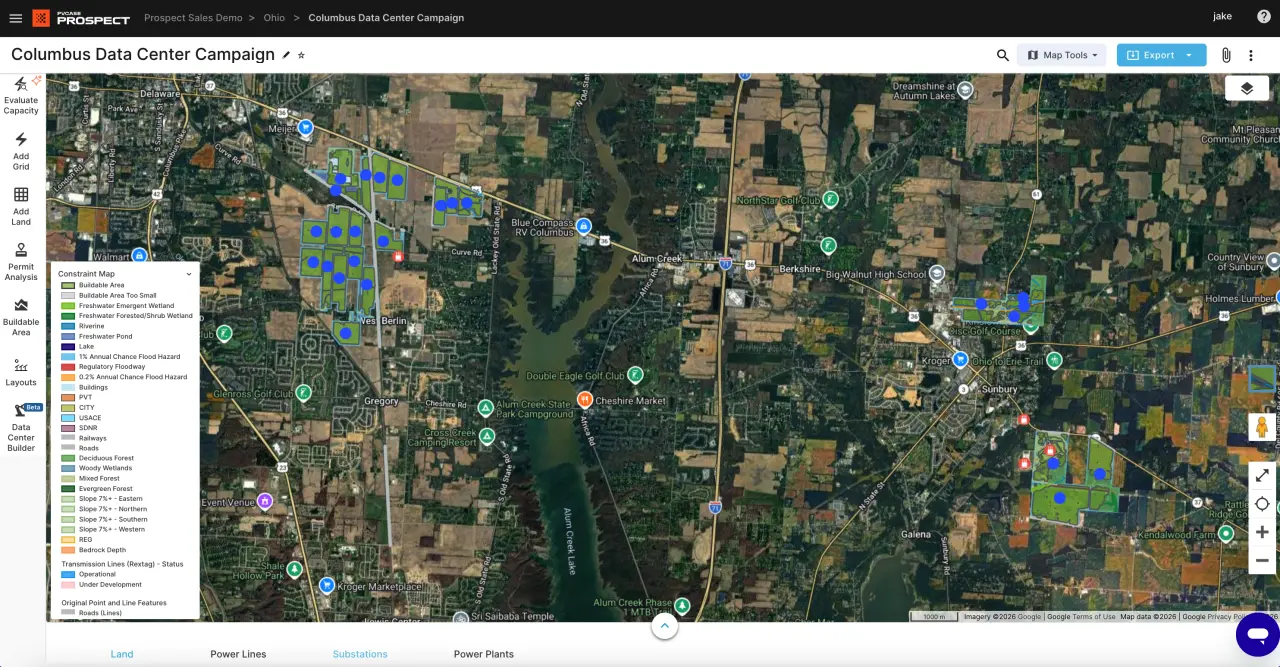
With promising power and infrastructure areas established, the analysis can move from broad locations to specific parcels.
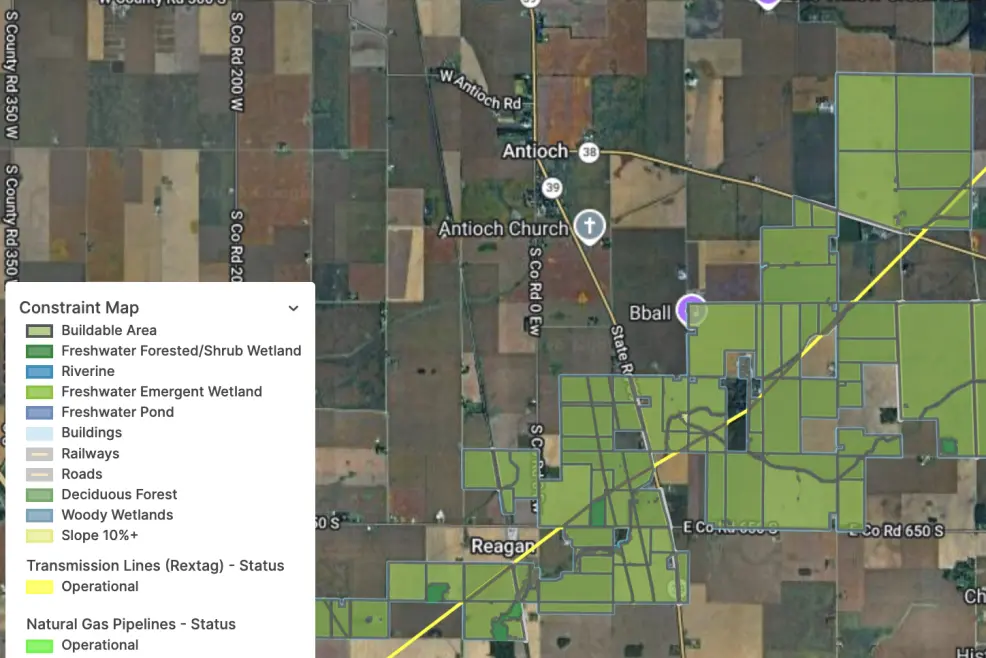
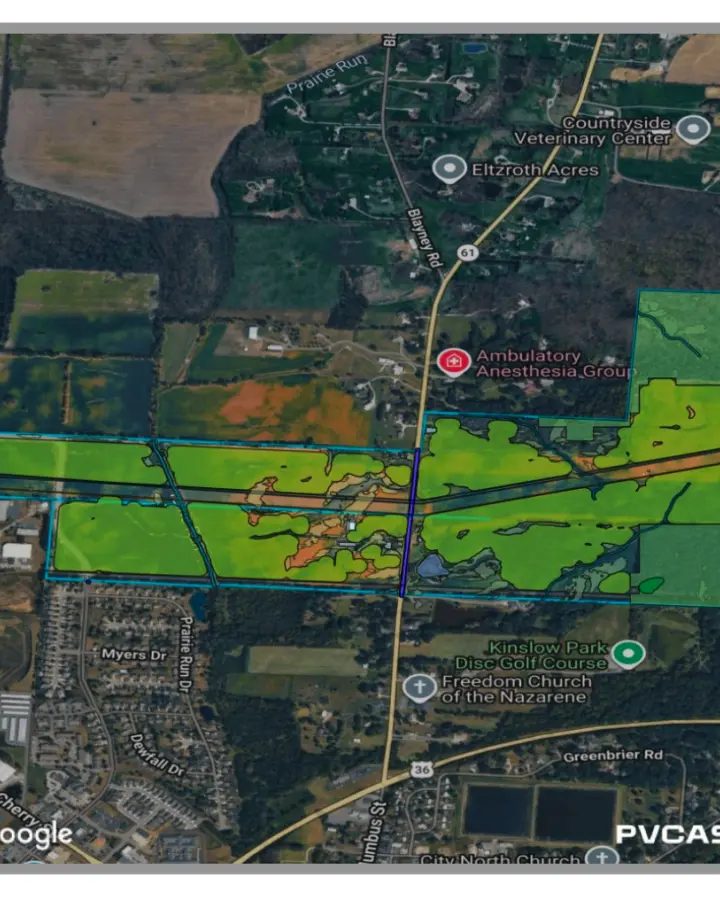
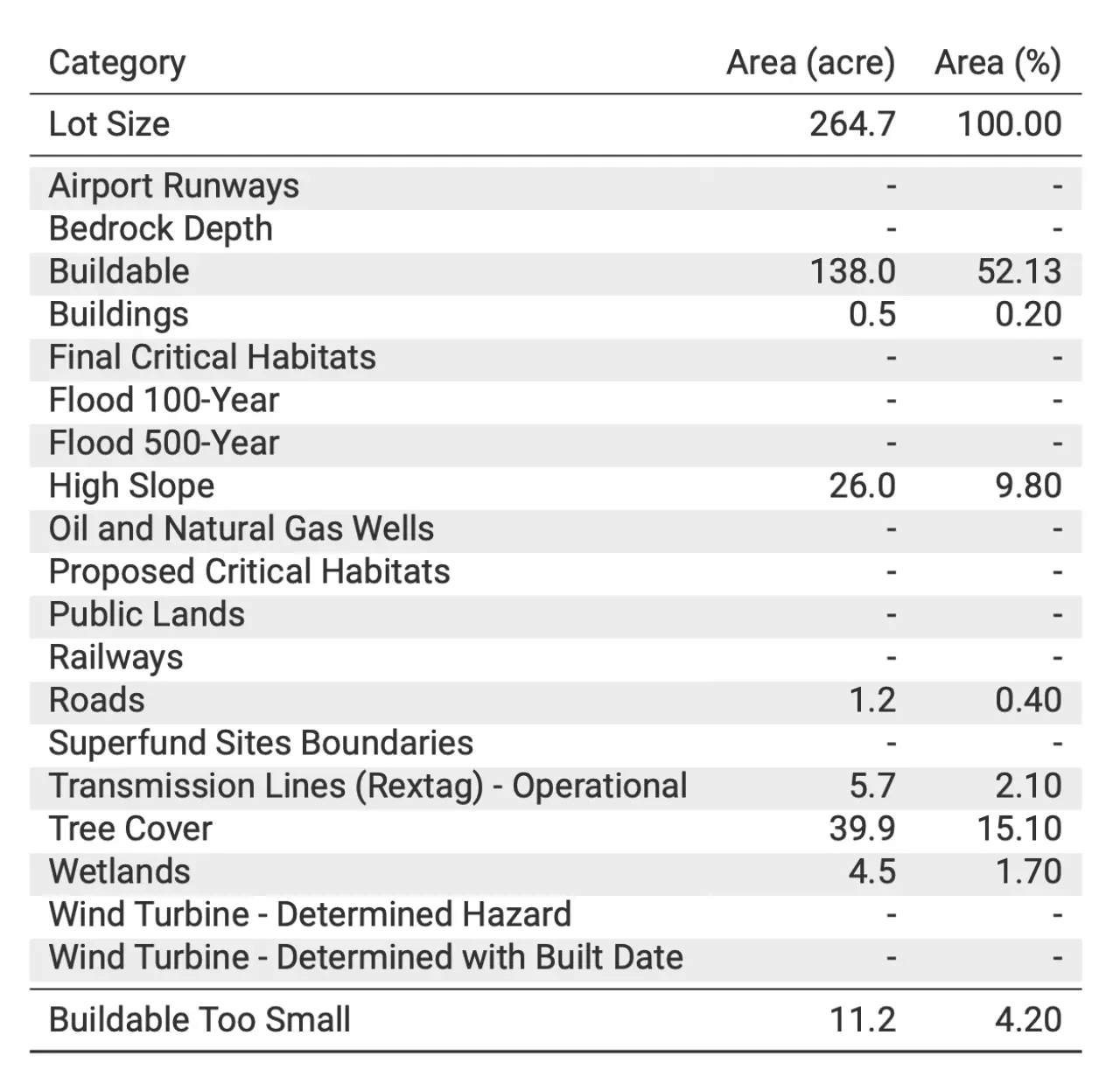
PVcase Prospect allows developers to search for parcels based on project criteria and evaluate buildable acreage against constraints. GIS processing can be used to generate constraint maps across multiple candidate sites and filter the results to locations that meet the project's land requirements.
Parcel ownership and contact information can then support the transition from site analysis to landowner outreach.
The result is a more scalable way to move from “Where could this project work?” to “Which specific parcels are worth pursuing?”
Find more information about PVcase Prospect’s automated parcel screening strategies in our comprehensive site selection guide.
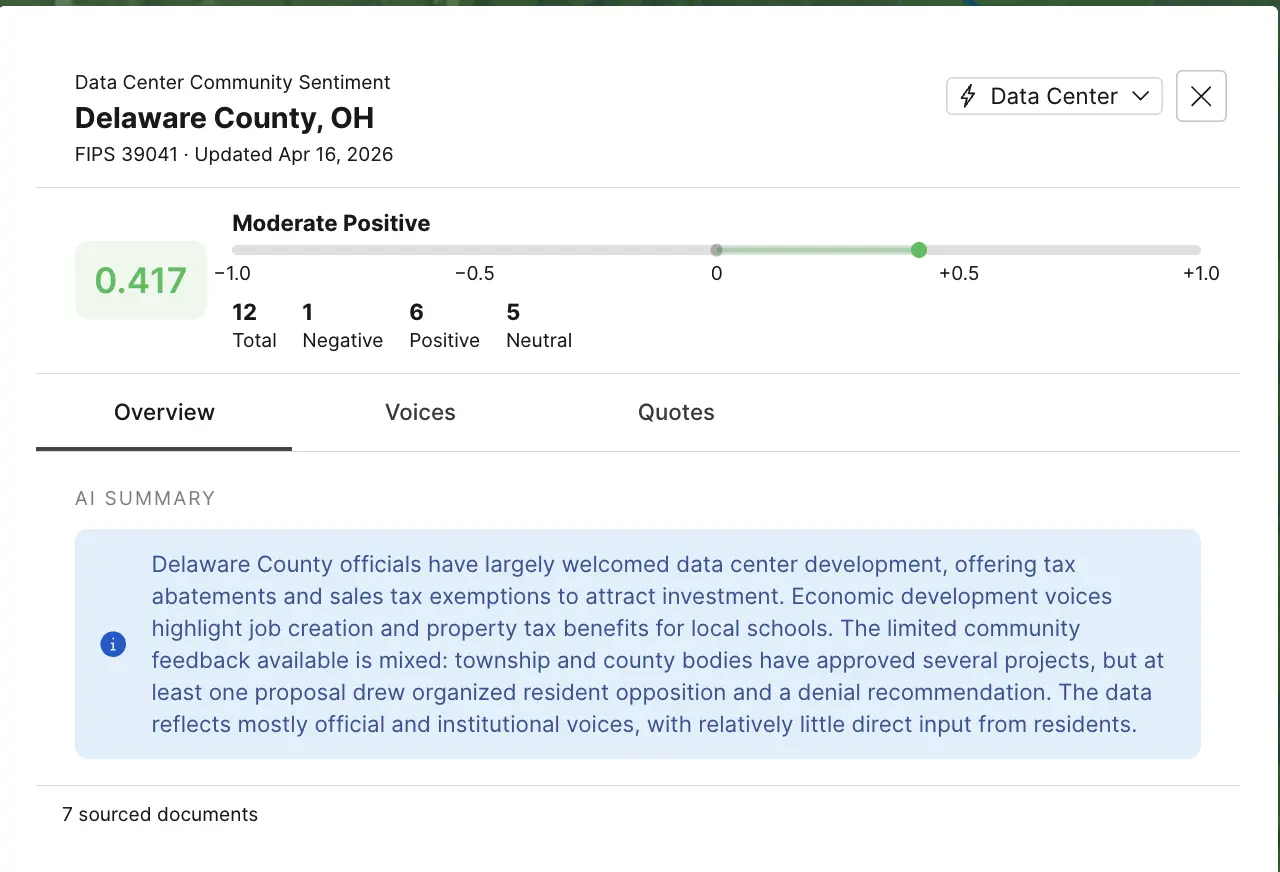
With power, infrastructure, and land conditions established, the search moved beyond technical feasibility to understand the local development environment. Using PVcase Prospect, we reviewed zoning alongside local news and community sentiment signals for the shortlisted area. This added an important layer to the site assessment: whether an otherwise promising opportunity could face permitting challenges or local opposition as it progressed.
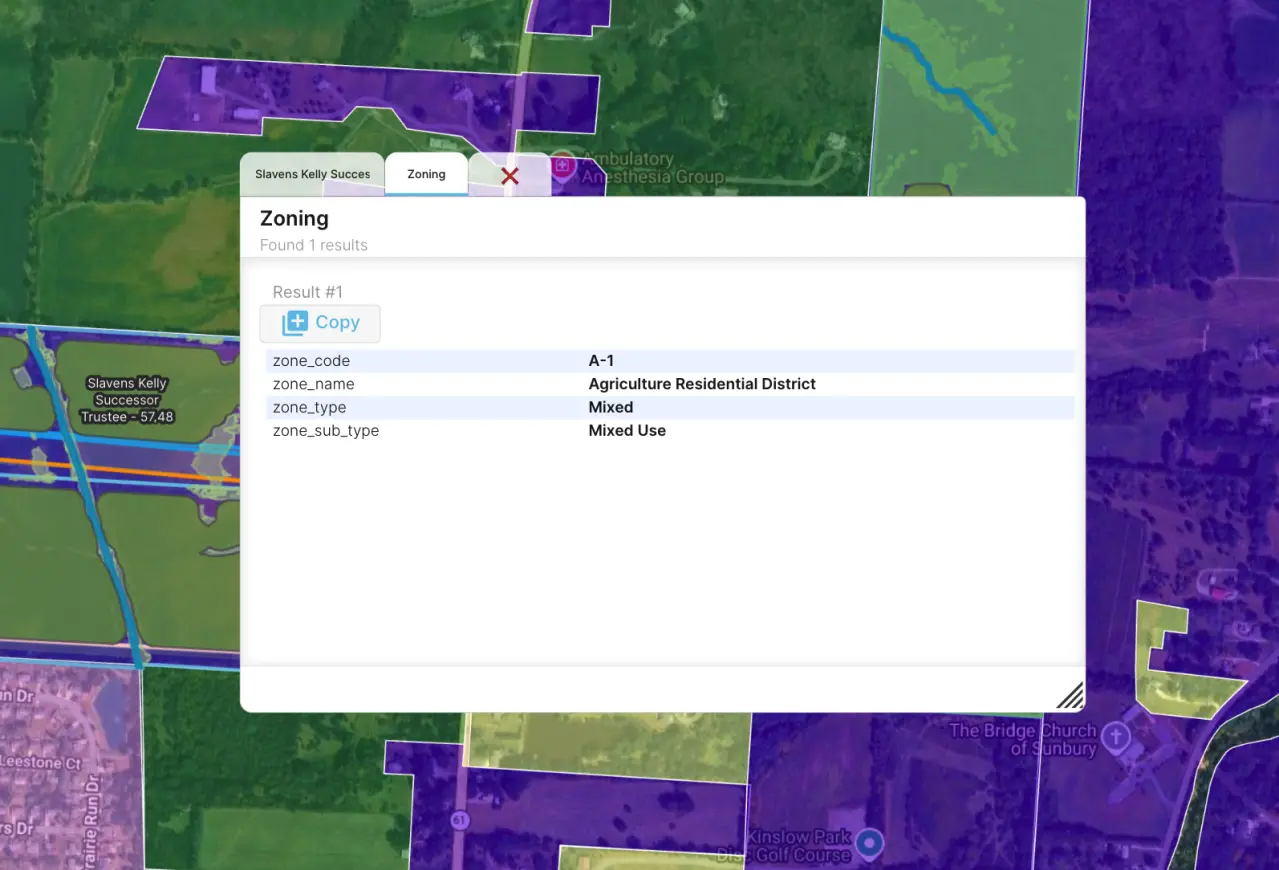
For the identified site, the analysis showed FR-1 (Farm Residential District) zoning and moderately positive sentiment, with active projects providing some development precedent. At the same time, growing county-level pushback and the governor’s stance against large-scale data centers surfaced risks that would require further consideration.
Bringing these signals into the search early helped build a more complete picture of the opportunity before moving into deeper diligence.
With the site narrowed down, the final step was to understand how the proposed data center could actually take shape on the land.
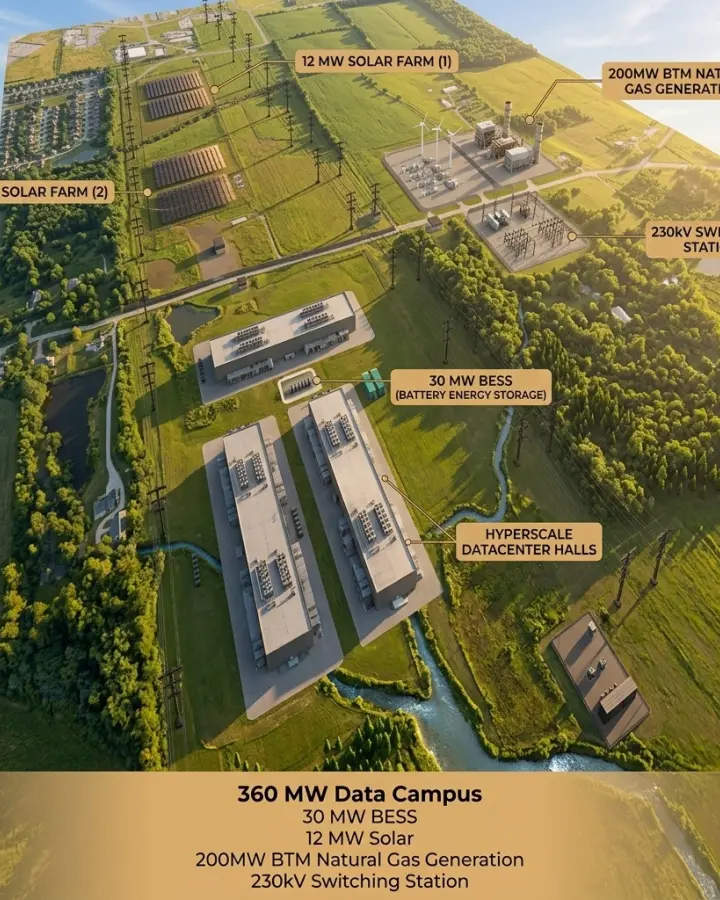
Using PVcase Prospect, we moved from parcel-level analysis to an early test fit, evaluating building dimensions alongside practical site requirements such as hallways, parking areas, and access roads. This helped show how the proposed campus could fit within the available buildable area — adding another layer of confidence to the site assessment.
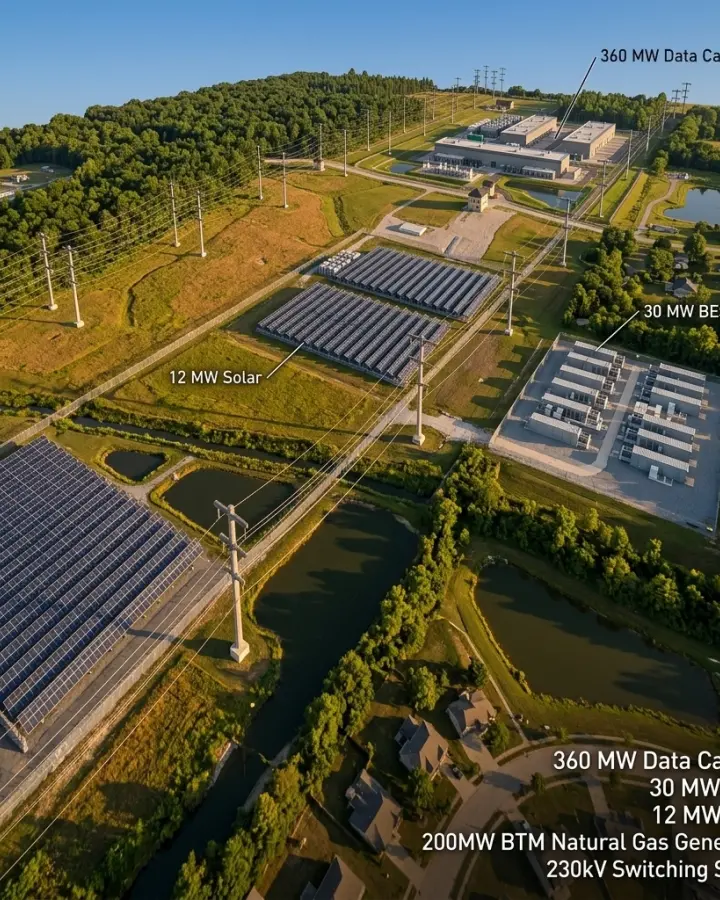
From there, the project could be visualized in 3D, turning the early design into a clearer representation of the proposed development for internal teams, stakeholders, and local authorities.
With this step, we took the opportunity from a location on a map to a tangible project concept.
The analysis does not end once a promising site is identified. The findings need to be shared, reviewed, and turned into the next development actions. PVcase Prospect brings the information gathered throughout the search into project-ready outputs, helping teams move from site evaluation to landowner outreach, internal review, and further diligence without rebuilding the analysis in separate documents.
Landowner contact report: parcel-level reports provide ownership, address, zoning, and available contact information, giving development teams the information needed to begin landowner outreach.
Executive report: the project analysis can also be consolidated into a PDF covering the key findings across interconnection, land, and site feasibility. This gives internal decision-makers and external stakeholders a common view of the factors supporting — and potentially challenging — the opportunity.
For the Slavens Kelly Trustee Data Center, the analysis ultimately surfaced a site that met the campaign's core power and land requirements, while also revealing the zoning and community considerations that would need further diligence before development.
QUICK TAKE
Unifying grid, land, zoning, and market data accelerates site selection while providing earlier visibility into development risk before committing capital.
The Slavens Kelly Trustee data center project showed the true value of applying a holistic approach to early-stage development for data centers:
Automated workflows reduced the manual work involved in searching, filtering, and cross-referencing information across the process. Instead of spending that time assembling inputs, the analysis could stay focused on evaluating which opportunities were worth advancing.
Power capacity alone did not determine the outcome. Interconnection economics, critical infrastructure, buildable land, zoning, and community sentiment all added context to the same opportunity. Bringing them together provided a more complete basis for evaluating the site.
The analysis surfaced both positive indicators and areas requiring further diligence. In this case, sufficient power and buildable acreage could be considered alongside zoning and emerging community concerns before additional resources were committed.
Information that would traditionally require separate datasets, studies, research, and outreach was available throughout the workflow. The resulting reports then carried that analysis into the next steps — from internal review to landowner outreach and deeper diligence.
Ultimately, the process helped answer a more important question than whether a site simply met individual criteria: is this opportunity strong enough to justify the next investment of time and capital? For the Slavens Kelly Trustee Data Center, the result was a clearer view of both the opportunity and the risks that would shape that decision.

Turn complexity into clarity and confidently move your data center project forward